
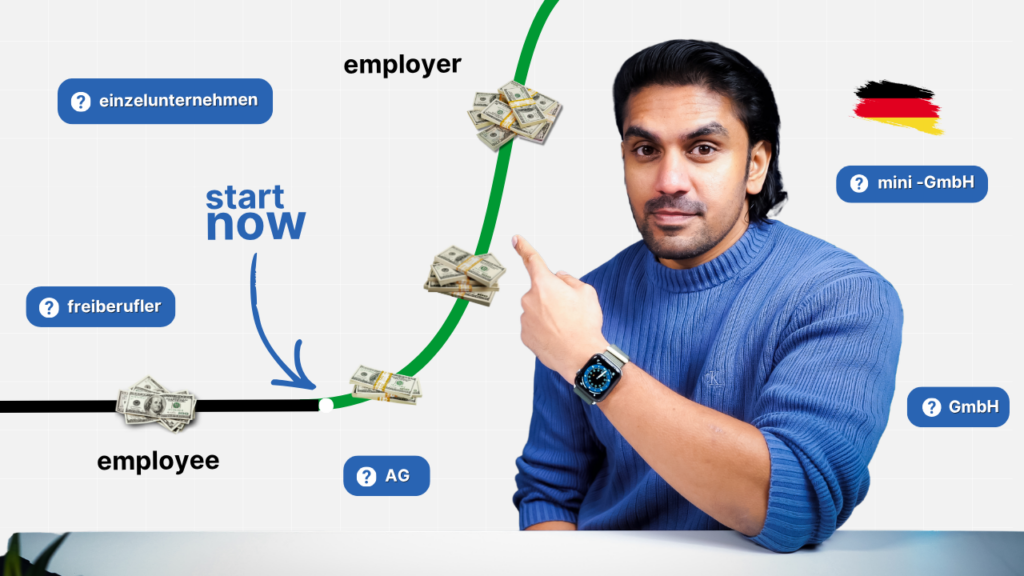
Lately, I have been noticing something very interesting here in Germany.
More and more people I know are becoming entrepreneurs. Opening small restaurants. Selling handmade products. Launching YouTube channels. Even running food trucks and making real money on the side.
And that sounds exciting… until you realize this is Germany.
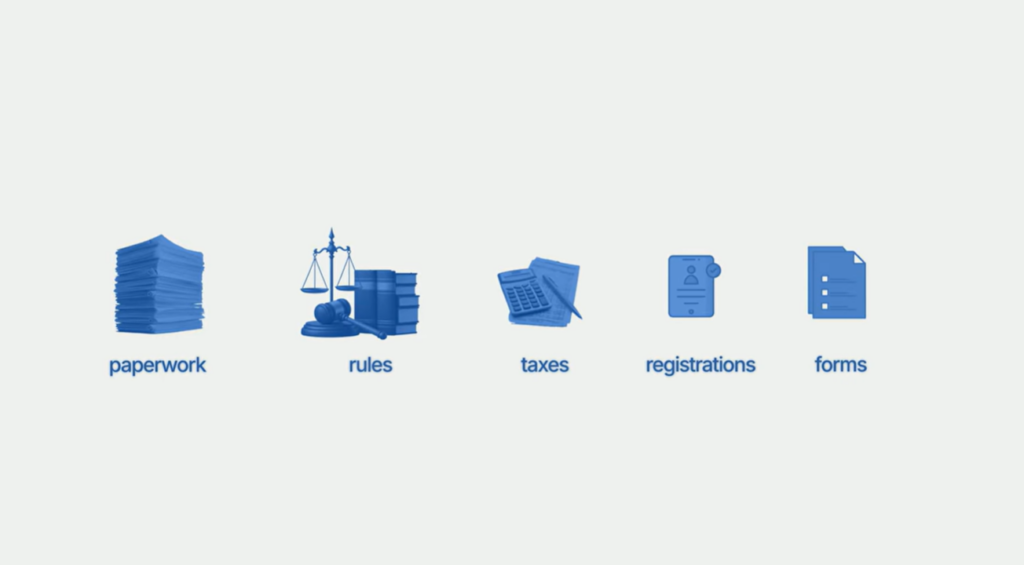
On paper, Germany ranks pretty high for ease of doing business. But in real life, the struggle is very real. Paperwork. Rules on top of rules. Taxes, registrations, and forms that you didn’t even know existed.
And if you’re an expat, it gets even harder. Because now you’re not just figuring out the system; you’re doing it in a language you’re not totally comfortable with. So many hesitate. Not because they don’t have ideas. But because they don’t know where to start.
That’s why I’m starting a brand-new series, dedicated entirely to running a successful business in Germany. I’m going to walk you step by step through the whole process of starting your first business. We’ll go through registrations, forms, taxes, legal basics everything. And most importantly, how to do all of this without losing your mind.
And let’s start with the most important question: “Okay… I have an excellent idea, but what kind of business should I start?” And this is important. Because in Germany, the type of business you choose changes everything. Your taxes. Your liability. Even the amount of paperwork you will have to deal with.
I’ll break down every business structure in simple terms, explain to you who each one is actually meant for, and help you choose the best one for your situation.
Einzelunternehmen (Sole Proprietorship)
The easiest and most common way to start is with an Einzelunternehmen or a sole proprietorship. Here, you’re the boss, the profits are yours, and the taxes are handled through your personal income. If you’re just starting out or testing an idea, this is the easiest path you can take. It’s the simplest with the least paperwork.
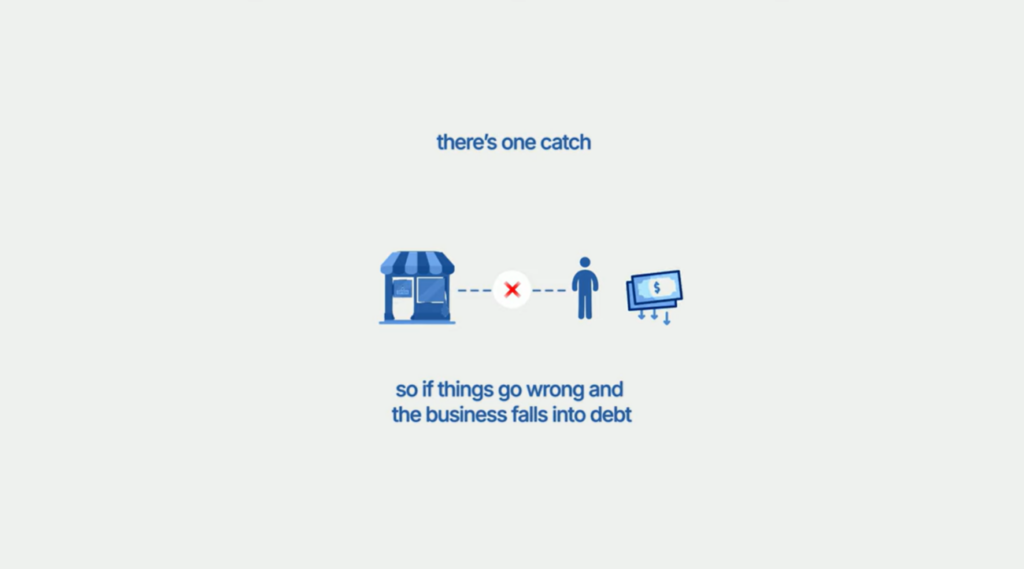
But there’s one catch. There’s no legal separation between you and the business. So if things go wrong and the business falls into debt, you’re personally responsible. Now, for most people, offering a service or selling something with very low upfront costs, this usually isn’t an issue. Because you’re not taking big loans. You’re not signing massive contracts. So the risk stays limited. Your expenses are small, your commitments are small, and you can stop anytime if things don’t work out.
So if you want the most straightforward way to begin your entrepreneurial journey in Germany, starting as an Einzelunternehmen is honestly one of the best places to start.
Freiberufler (Freelancer)
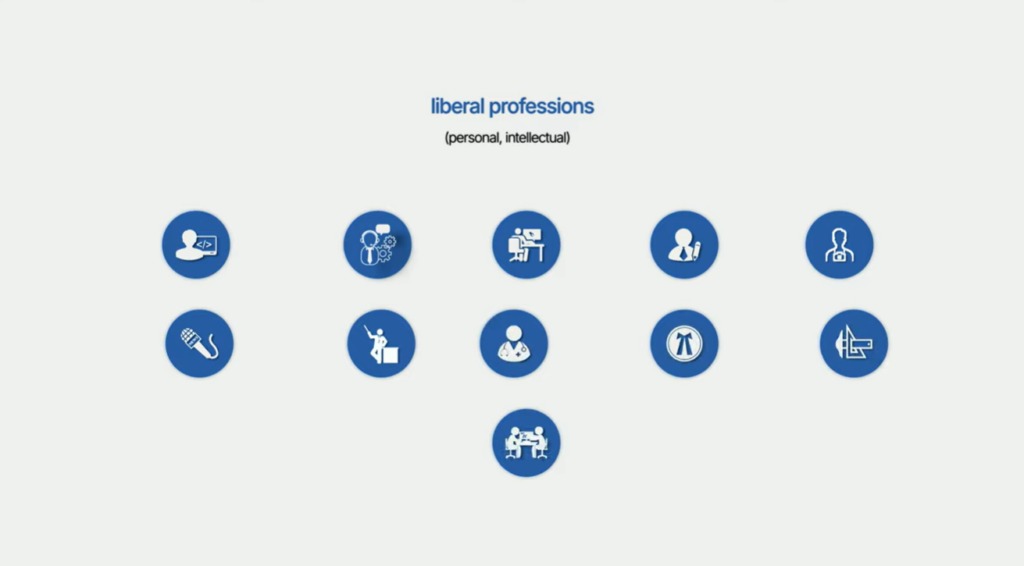
Next, we have the Freiberufler, or freelancer. And if you’re offering a service based on your expertise or creativity, this is usually where you want to start. But here’s the important part. Not every service qualifies as a Freiberufler in Germany.
In Germany, there’s a category called the liberal professions. These are roles built around personal, intellectual work. Think software developers, IT consultants, graphic designers, writers, photographers, journalists, teachers, and similar professions. Doctors, lawyers, architects, and tax advisors also fall into this group. But those are regulated professions, which means you need formal recognition before you can offer those services.
And if your work fits into any of these categories, it is important you don’t register a business. You register as a Freiberufler.
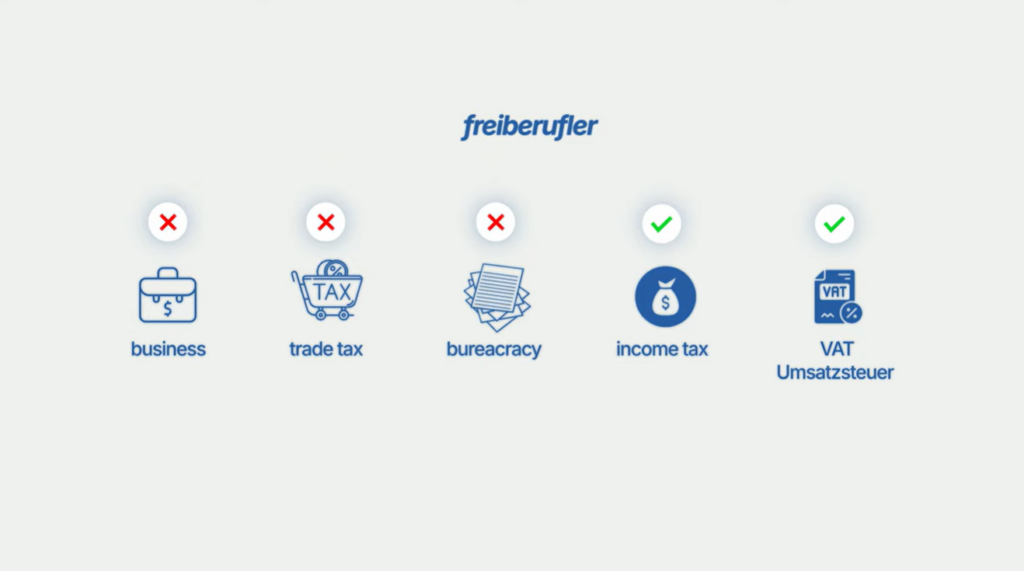
Why does this matter? Because a Freiberufler is not considered a business or trade in Germany. That means no trade tax. And in most cases, a lot less bureaucracy. Of course, you’ll still pay income tax on whatever profit you make, and in many cases, you’ll need to charge Value Added Tax (VAT) or Umsatzsteuer to your clients. But compared to running a full business, it’s much lighter and way more straightforward.
GbR (Civil Partnership)
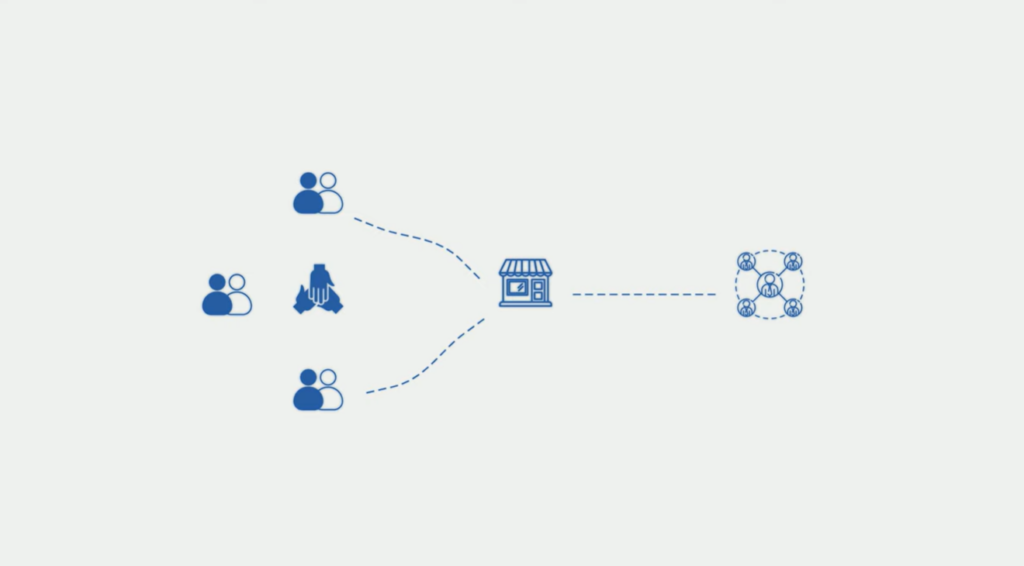
Starting a business is a big step. So it’s only natural that you might want to do it with a partner or a friend. And if that’s the case, you’ll probably need to register as a GbR or Gesellschaft bürgerlichen Rechts. It sounds scary, but it’s simply a way for two or more people to run a business together.
It’s basically multiple einzelunternehmens or sole proprietors working under one shared name. You split the work, you split the profits… And yep, you also split the responsibilities. And just like an Einzelunternehmen, there’s unlimited personal liability. So if something goes wrong, every partner is personally responsible. That’s why trust is a big deal here. If you can’t fully trust your partner, it can get messy really fast.
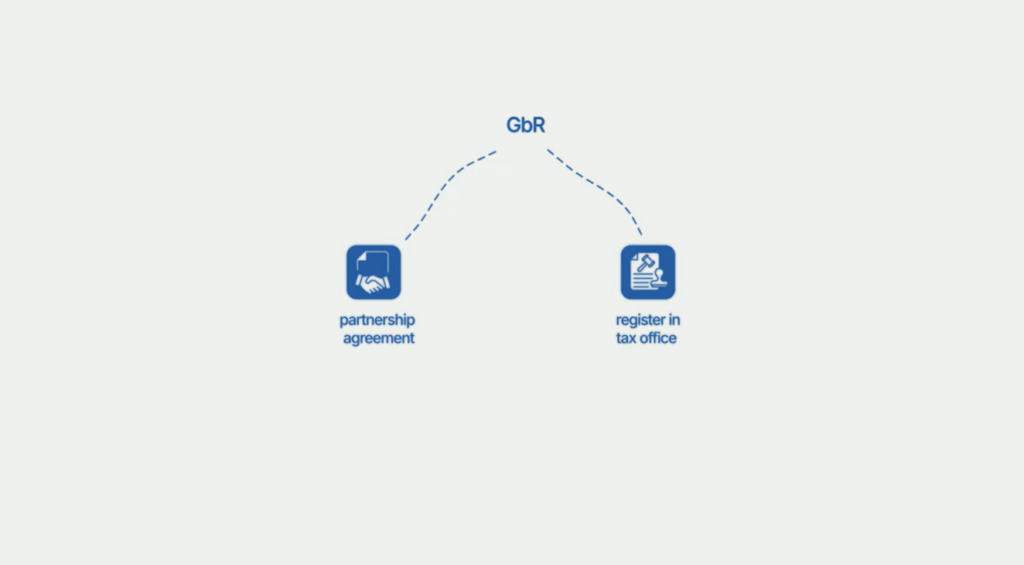
But the good news is that setting up a GbR is super simple. You only need a basic partnership agreement and to register with the tax office, and you’re up and running. So if you’re starting something small with someone you genuinely trust, a GbR is one of the easiest and most flexible ways to get started.
UG (Mini-GmbH)
Now, the biggest issue with the previous business structures is personal liability. If something goes wrong, your personal assets are on the line. So if you want real protection, you need a proper company structure. And yes, that usually means higher upfront costs.
But here’s the interesting part. There is a way to get that liability protection without spending a ton of money right away. And that’s exactly where the UG comes in — the Unternehmergesellschaft, also known as the mini-GmbH.
Unlike an Einzelunternehmen or a GbR, a UG is its own legal entity. Which means if something goes wrong, the company is responsible for the debts — not you. And here’s the part that almost sounds too good to be true: you can start a UG with just one euro. Yes… literally one euro.
But of course, it’s not all a walk in the park. Setting up a UG comes with a few extra steps. You’ll need a notary. You’ll have to register in the commercial register. You’ll need to maintain proper accounting. And there’s one more rule you should know. Every year, the UG has to keep 25% of its profits aside until it builds up at least €25,000 in capital.
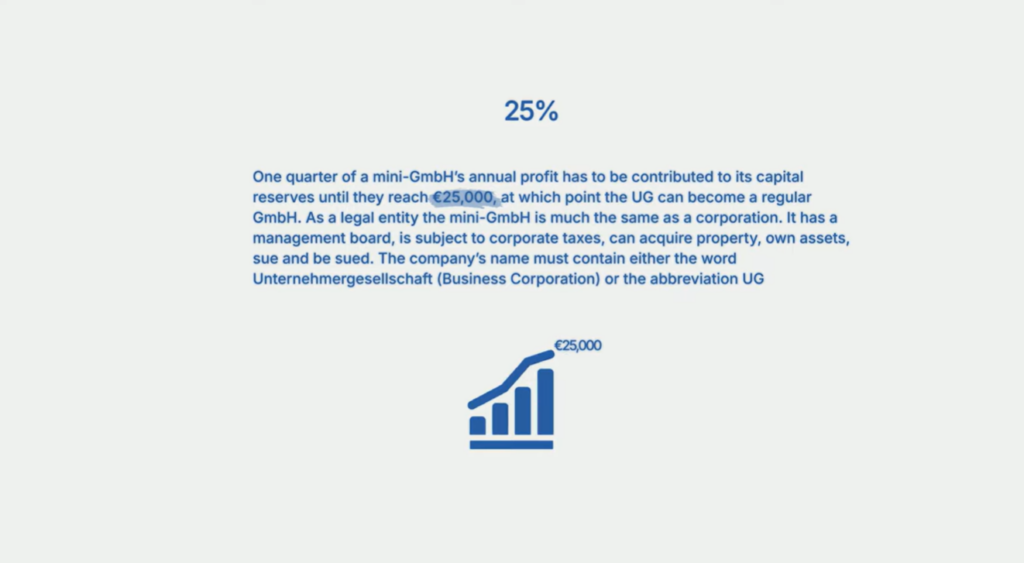
Still, if you want the protection of a limited liability company without burning through your savings, the UG is that perfect middle ground. It’s simple, affordable, and gives you the safety net most beginners need.
GmbH (Limited Liability Company)
And then we have the GmbH, Gesellschaft mit beschränkter Haftung, or simply a company with limited liability. It’s one of the most popular business structures in Germany, especially for small and medium-sized businesses that want to look professional, stable, and established.
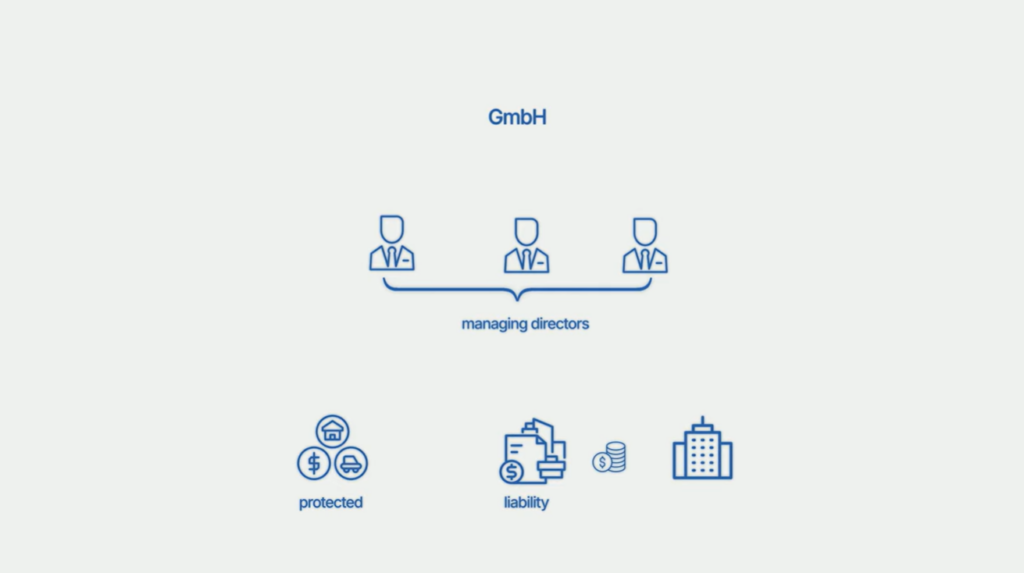
A GmbH is run by one or more Geschäftsführers, or managing directors, and is its own legal entity. So your personal assets stay protected, and your liability is limited to whatever money you actually invest in the company. But of course, this level of protection and credibility comes with more work. You have to register it in the Handelsregister, which is the commercial register, follow proper accounting rules, and handle more paperwork overall.
To start a GmbH, you need €25,000 in share capital. But you don’t have to pay all of it on day one. You can register the GmbH by paying at least €12,500 upfront. The remaining amount stays as a liability and can be paid in later as the company grows.
So yeah, a GmbH is definitely more complex than a UG or a sole proprietorship. But in return, you get strong liability protection, high credibility, and a business structure that’s built to scale.
Aktiengesellschaft (AG)
And finally, we have the AG, short for Aktiengesellschaft, basically the German version of a public limited company. This is the structure big corporations use when they want to get listed on the stock market and raise money from investors.
Now, for most of you starting out, this is overkill. You’re not going to wake up one day and say, “Yeah, let me just start an AG real quick.” So we won’t go too deep into it. Just remember this: an AG is like a GmbH, built for large companies that are playing in a very big league.
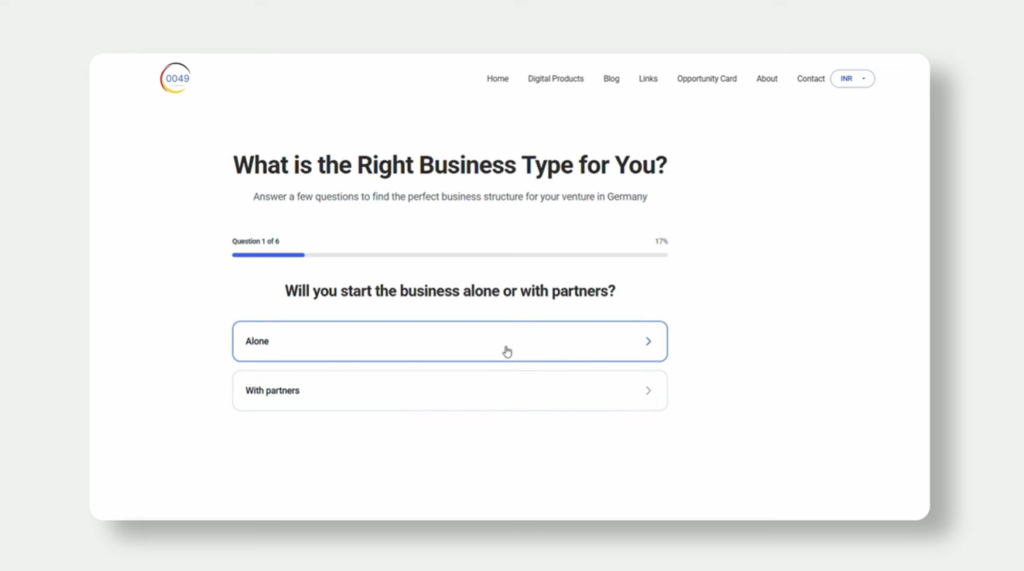
Alright, so now you know the main types of businesses you can start in Germany and what they roughly mean. If you’re still not sure, you can use a simple tool on my website. Just answer a few simple questions, and it’ll help you figure out which business structure actually fits you. I’ll leave a link in the description below.
But just keep this in mind: you don’t need to have everything figured out to start. You don’t need a perfect business plan. You don’t need to quit your job tomorrow. You don’t even have to be fully confident that your idea will work. You just need to take that first step. All you really need is an idea. A service or a product that gives people real value and a way to monetize it.
Because something interesting happens once you start; you learn. You slowly figure things out. And that little idea you’ve been sitting on? It can grow into something real. Something that’s actually yours.
Start today. Take that small step. Because the world doesn’t need more people waiting for permission. It needs people like you people who are willing to try, put in the work, and build something meaningful.
And hey, if you do end up starting your business, come back and tell me. I’d love to celebrate that with you.
If you found this helpful, or if you have any questions, drop them in the comments. I read every single one, and I’ll do my best to help you out. I’ll be going deeper into each of these topics plus the formalities, taxes, and everything else you need in this series.