
If you’re coming to Germany on a student visa or an Opportunity Card, a little extra income can go a long way. And one of the best ways to earn that is through part-time jobs. But honestly, with all the bureaucracy, competition, and language barriers, finding one isn’t always easy.
But there’s one job that checks all the boxes: it’s easy to get, pays more than the minimum wage, comes with great benefits, and you don’t even need to speak German. I am talking about Amazon, and you’ll know exactly what roles are available, how to apply step-by-step, what documents you’ll need, and what benefits you can actually expect. Let’s get started.
The Roles
Amazon operates all over Germany from small delivery stations to huge fulfillment centers. And the kind of work you’ll do depends on where you end up.
Let’s start with the big warehouses called the fulfillment centers. These are the huge facilities where products get stored, packed, and shipped out to customers all over the world. The most common role here is called a “fulfillment associate.” And the work includes picking items from shelves, packing them into boxes, or loading and unloading pallets.
Now, here’s the thing: part-time roles in fulfillment centers aren’t that common. Most positions are full-time. So if you’re someone who is only allowed to work limited hours, this might not be the best option.
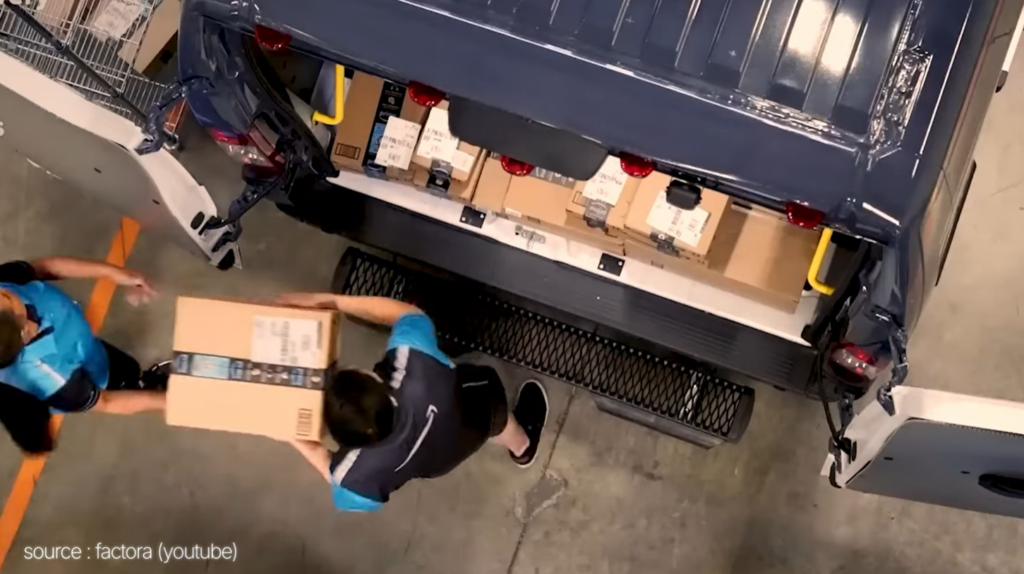
For part-time opportunities, it’s usually better to look at delivery stations or sortation centers. The role is called “Sortation Associate” or, in German, “Sortiermitarbeiter.” Your main tasks include scanning packages, sorting them by delivery route, and loading or unloading delivery vans. Here you can find both full-time and part-time positions, and the shifts are usually shorter, like early morning from 5:30 to 9:30 AM or evening from 5:00 to 10:00 PM.
This is perfect if you’ve got classes during the day or if you’re spending the day applying for jobs. You can work a few hours, earn decent money, and still have time for everything else.
So that’s the first step: understanding which role fits your schedule. But once you know that, how do you actually apply?
Here’s where most people mess up and never hear back because they didn’t follow the process correctly.
So let me walk you through it step by step.
The Application Process
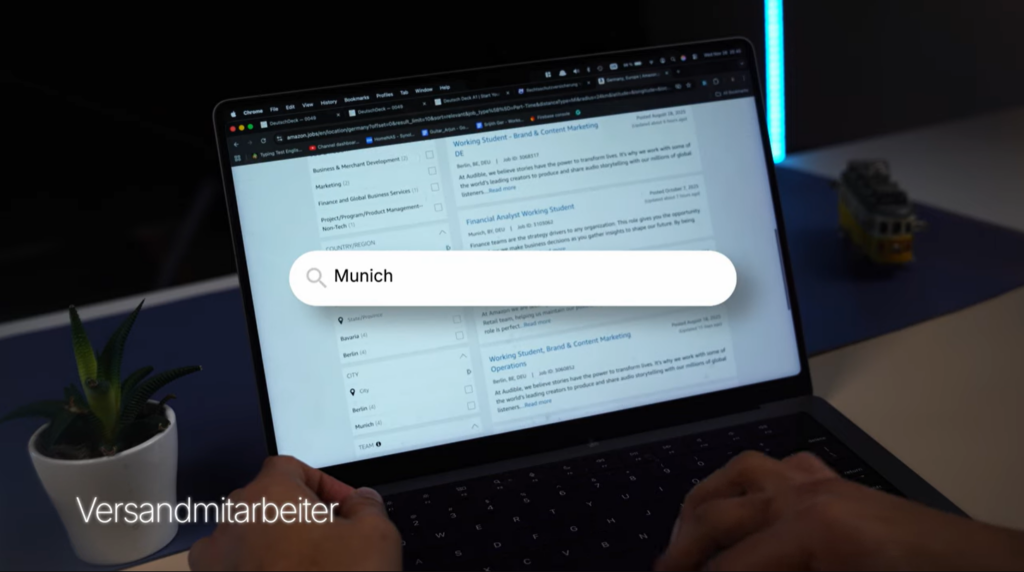
The best place to start is Amazon’s official job site Amazon.jobs. Just type in your city [e.g., Munich] and use keywords like Versandmitarbeiter or Sortiermitarbeiter, and you’ll see a list of available openings near you.
You can also check platforms like Indeed, StepStone, or even LinkedIn. Or even better, join local Facebook groups for students or expats in your city. People often share job openings there, especially when there’s urgent hiring.
Once you find a job listing that fits, here’s what happens next.
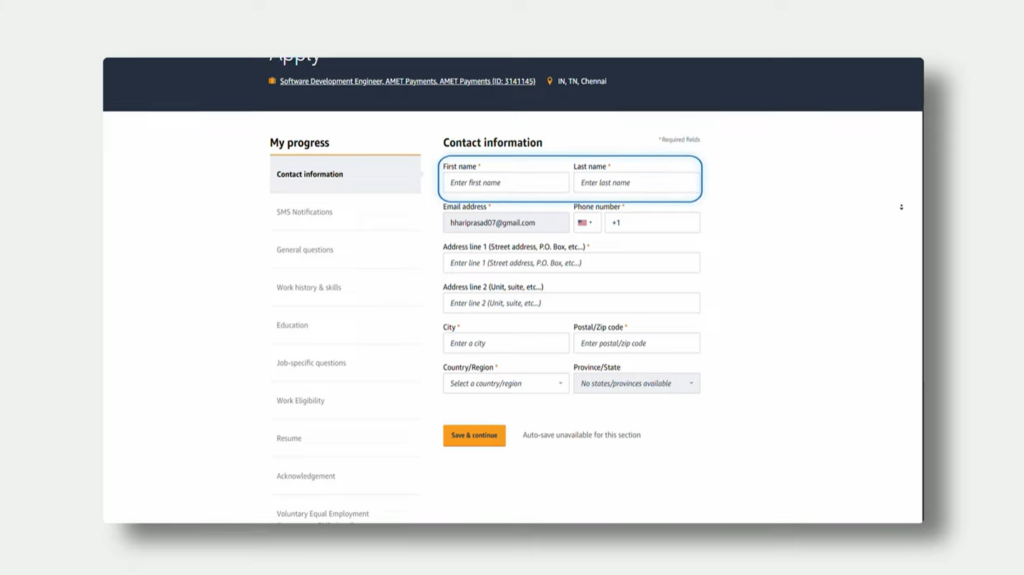
If you’re applying through the official Amazon website, you’ll first need to create an account on Amazon. The application itself is simple and quick. You’ll fill in your basic details: your name, contact info, work eligibility, and shift preferences.
Make sure you clearly mention when you’re available to work, and confirm that you’re over 18 and legally allowed to work in Germany. Once you submit everything, you’ll get a confirmation email.
Usually, within a few days, Amazon will invite you to a short phone or virtual interview, 10 to 15 minutes, max. They’ll ask a few simple questions like, “Are you still interested?” or “When can you start?” Basically, they just want to confirm that you’re available, flexible, and ready to work.
If everything checks out, you’ll get a job offer with all the key details: your position, pay rate, location, and start date.
SECTION 3: Documents and Onboarding
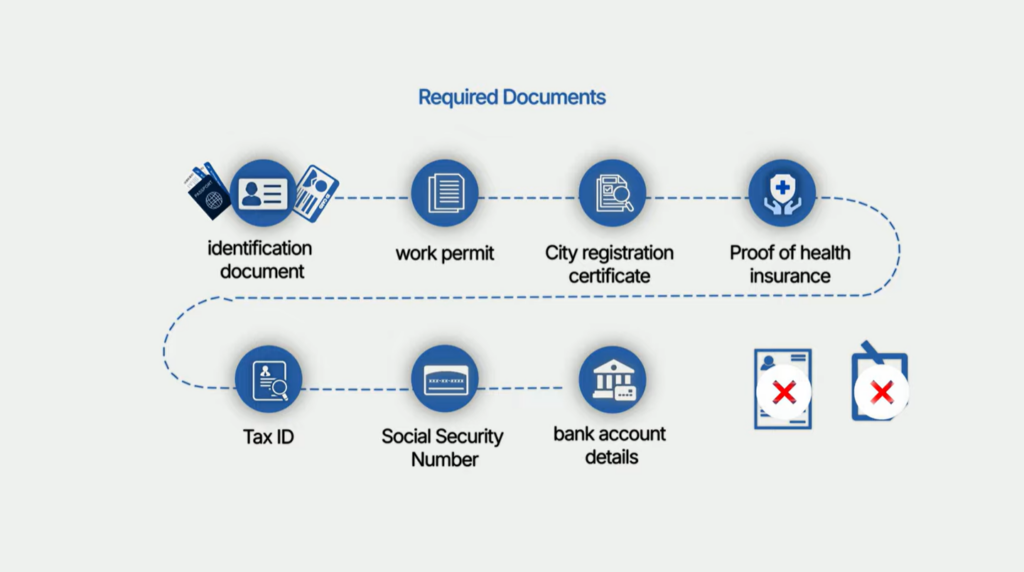
Alright, so you’ve got the offer. Now comes the paperwork. And yes, this is Germany, so there will be paperwork. You will have to submit a copy of your
- Identification document: your passport or ID card
- Work permit or Arbeitserlaubnis
- City registration certificate or Meldebescheinigung
- and finally, Proof of health insurance, which is mandatory in Germany
You may also need to provide your Tax ID (Steuer-ID), your Social Security Number (Sozialversicherungsnummer), and your bank account details (IBAN) so Amazon can pay you.
Usually, you don’t need a cover letter or résumé for warehouse jobs, but I’d recommend having them ready, just in case they ask.
On your onboarding day, you’ll sign the remaining papers, show your original documents for verification, and get your work gear — things like your ID badge, safety vest, locker info, and sometimes even a pair of safety shoes or a voucher for them.
And that’s it. You’re in.
Now, at this point, you might be thinking, “Okay, this all sounds fine. But what’s the actual pay? And what are the benefits?” Good question. Because this is where Amazon actually stands out.
Salary and Benefits
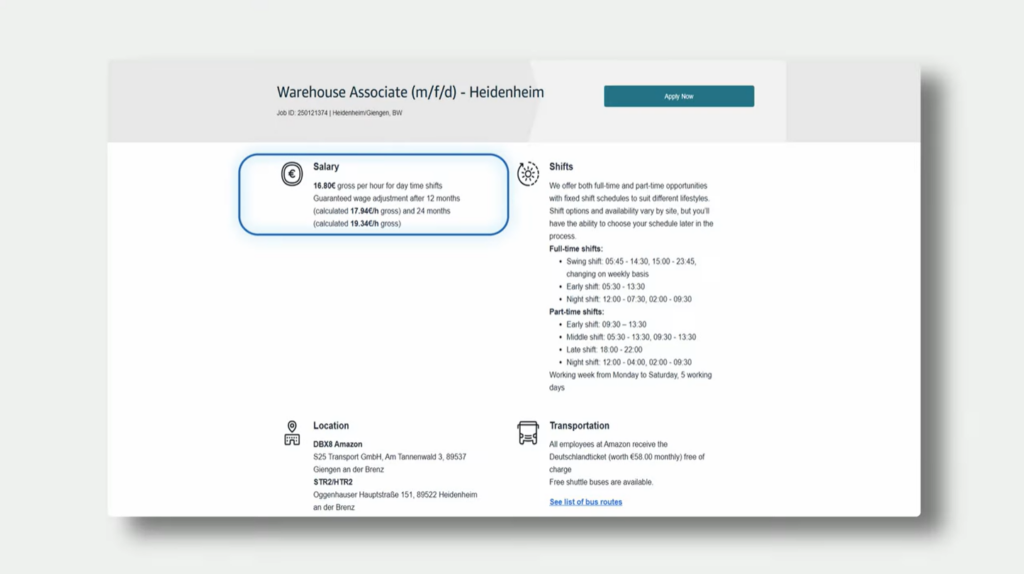
As of 2025, the typical starting rate at Amazon for warehouse jobs is around €15 to €16 gross per hour, depending on the location. Which, if you see, is noticeably higher than Germany’s general minimum wage
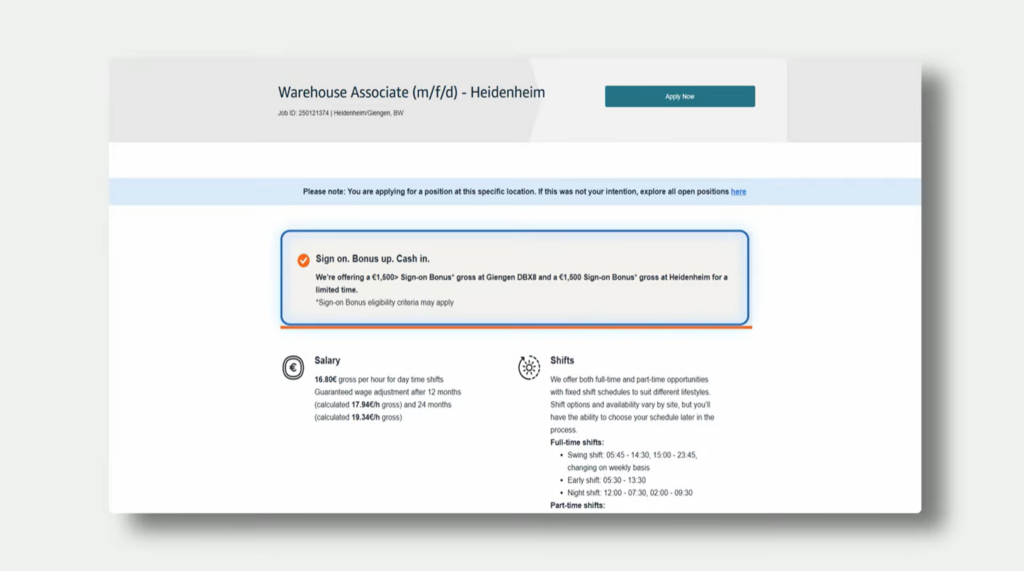
If you work night shifts, you’ll usually get a 20% pay bonus. And overtime is paid extra. Sometimes, Amazon also offers sign-on bonuses or seasonal bonuses during busy periods like Christmas or Black Friday, so it’s always worth checking the job ad for such extra benefits.
If you’re full-time, you get 28 days of paid vacation every year. And if you’re part-time, you’ll get fewer days, depending on how many hours you work. At work, you’ll always have access to free coffee, tea, and water. And most warehouses also have canteens where you can grab a hot meal for a low price — usually around €3 to €5. Another nice benefit is the free Deutschlandticket. This covers travel on local buses, trains, and metros anywhere throughout Germany without paying extra.
Work Culture
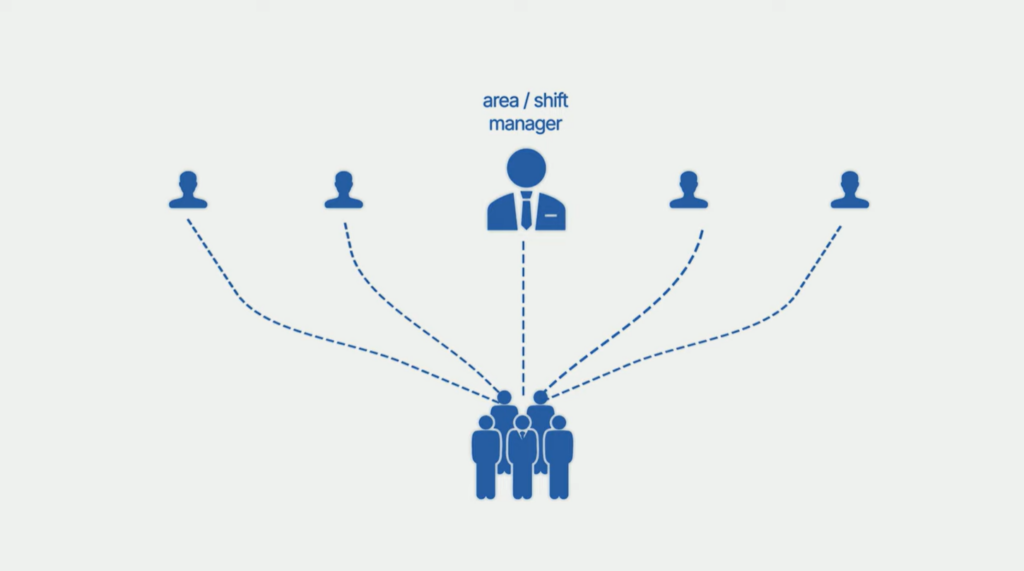
At Amazon, you’ll be working with people from all over the world, and the work atmosphere is friendly and open. Each team has a supervisor, usually called an area manager or shift manager, and you’ll also find “leads” or “coaches,” who are experienced workers helping others on the floor.
Most warehouses are climate-controlled, and safety is taken seriously. You’ll get proper training on how to lift things correctly, use tools like box cutters safely, and even be asked to do quick stretches before your shift.
When it comes to breaks, during an 8-hour shift, you usually get two 15-minute paid breaks and one 30-minute unpaid lunch break.
And since this is Germany, labor laws are strict and well-enforced. Many warehouses even have active worker councils that represent employees and make sure everything stays fair.
Now, let me be honest with you. The work itself is physical. You’ll be on your feet most of the time walking around the warehouse, scanning, lifting, and sorting packages. Amazon’s job descriptions clearly mention that you should be able to stand or walk for up to 8 hours per shift and lift items weighing up to 15 kilos.
So if you’re not used to physical work, the first few weeks might be tough. Your legs will hurt. Your back might ache. But most people adjust within a couple of weeks.
The work can also be repetitive. You’re doing the same tasks over and over: scan, sort, load, repeat. Some people find that boring. Others find it relaxing because they can just zone out and listen to music or podcasts in their head.
But here’s the thing: this isn’t meant to be your permanent job. It’s just a stepping stone. It’s a way to earn money, get used to the German work culture, and do it while you complete your studies or search for a full-time job. The pay is fair, the schedule is flexible, and it’s a well-known company, which always looks good on your résumé. So if you’re in Germany and you need some extra cash on the side, this is one of the quickest, most reliable ways to do it. That said, it’s not “easy money” either.
And if you’re looking for something a bit more permanent, you can check out my résumé template made specifically for the German job market. It’s already helped a lot of people get interview calls much faster.