


Germany’s population is getting older and that too really fast. By 2030, more than 20 million people here will be over 67 years old. And guess which profession is in huge demand because of that? Nursing. Germany will need nearly half a million nurses by 2030. So if you’ve ever dreamed of working in Germany, this might just be your chance. Because nursing here isn’t just well-paid it’s respected, stable, and offers a really good work-life balance.
But… It’s not as simple as just packing your bags and moving here. Nursing in Germany is a regulated profession, which means there are certain requirements you have to meet before you can actually start practising as a nurse.I’ll explain everything in detail what you need to do if you already have a nursing degree, and what to do if you’re starting completely from scratch.
Now, there are actually two different paths you can take to become a nurse in Germany. And which one you should take really depends on your qualifications.
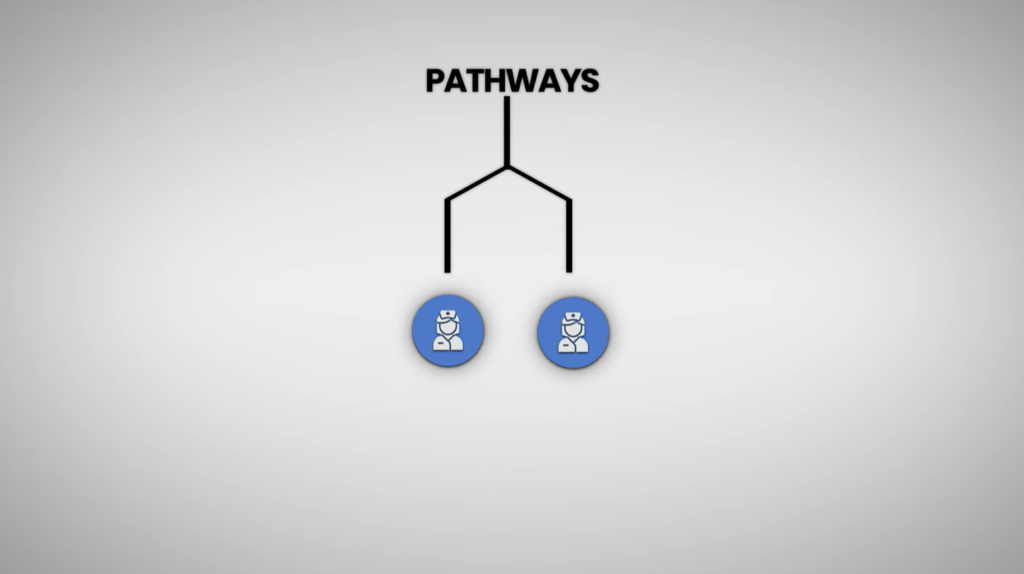
Pathway 1: Recognition of Foreign Nursing Qualifications
So, the first path is for those who are already trained nurses meaning you’ve got a nursing diploma or degree from your home country.
But just because you are qualified to work as a Nurse in your home country, doesn’t mean you are allowed to work in Germany. The very first thing you’ll need to do is get your qualification officially recognized in Germany. This process is called credential recognition, or in German, Anerkennung.
Now, each state in Germany has its own office that handles the recognition of foreign nursing qualifications. So, you’ll have to apply to the authority in the specific German state where you want to work. For example, if you’re applying in North Rhine-Westphalia, the office is called Zentrale Anerkennungsstelle für Gesundheitsberufe.
Now don’t worry. There is an easy way to find your corresponding office. Just head to the German government’s official website “Anerkennung in Deutschland.”, type in nursing as the profession, and then select the place where you want to work. You can enter a city name or even a postal code. After that, answer a few short questions about your nationality and qualification, and the site will show you exactly which office you need to apply to.
Now head over to their website and start a new application. You’ll need to fill in all the required details your personal information, details about your qualification, and upload all the necessary documents. Every document you submit has to be officially certified and then translated into German by a sworn translator.
You will need to provide your passport or ID as proof of identity, your birth certificate, and a CV or Resume that clearly lists your education, training, and work experience. Then your nursing diploma or certificate, academic transcripts or training details, and proof of work experience, if you have any. You’ll also need a police clearance certificate to show you have no criminal record, and a medical certificate confirming you’re fit to work. And if you’ve done any additional courses or special training, include those too.
Now comes a very important requirement language. Nursing isn’t just about having medical skills. It’s about talking to patients, understanding doctors, and working smoothly with your team. So to get your license to practice, you’ll need to prove that your German is strong enough to handle such real-world situations. So here’s the deal: you’ll need at least B2 level German according to the Common European Framework (CEFR).
Once you upload all the documents, you can simply submit the application and pay the processing fee. The amount depends on the state you apply to, but it’s usually somewhere between €100 and €600, with most cases falling around €200.
After this, the recognition authority will review your nursing education and work experience to see if they match German standards. And within around four months, you’ll get an official document called the assessment notice, or in German, the Feststellungsbescheid with three possible outcomes:
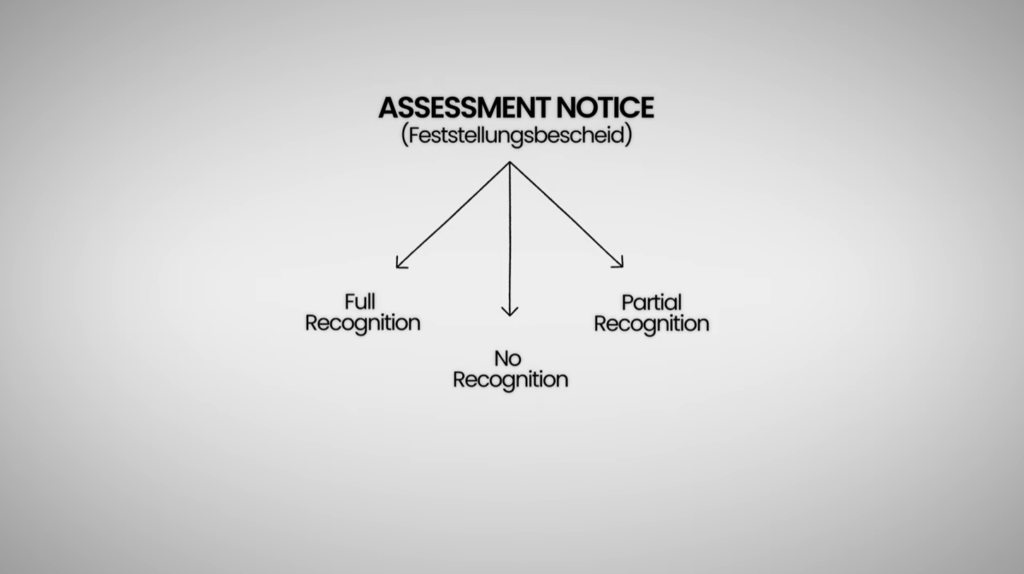
1. Full Recognition
This is the best-case scenario. It means your qualification is fully equivalent to German standards. Once you submit proof of your German language level, you’ll receive the Berufserlaubnis or your license to practice.
2. No Recognition (Rejection)
Now, this is rare, but it can happen if your education and training are just too different from German standards. If that’s the case, the only option is to start fresh. That means you’ll have to complete the full 3-year nursing training program in Germany to qualify. I will come to this later.
3. Partial Recognition
This usually means your training is almost equivalent, but there are a few gaps to fill. In that case, the assessment report will clearly explain what’s missing and what you need to do next. And to cover those gaps, you can either complete a bridging program or take a knowledge test to prove that your skills meet German standards.

1. The Bridging Program (Anpassungslehrgang)
First, let’s talk about the Bridging Program, or in German, Anerkennungspraktikum, or also Anerkennungsjahr.
Here’s how it works you’ll work in a German healthcare facility, like a hospital or a nursing home, as an assistant. So that you can fill any knowledge or practical gaps that were found during your assessment. You’ll get hands-on experience while also attending classes for specific modules to cover the theory part. Depending on how much you need to learn, this can last anywhere from a few months to even up to two years.
Once you’ve completed the program and your supervisor confirms that you’ve met all the requirements, your qualification will be fully recognized — and you’ll finally receive your nursing license or Berufserlaubnis.
2. The Knowledge Examination (Kenntnisprüfung)
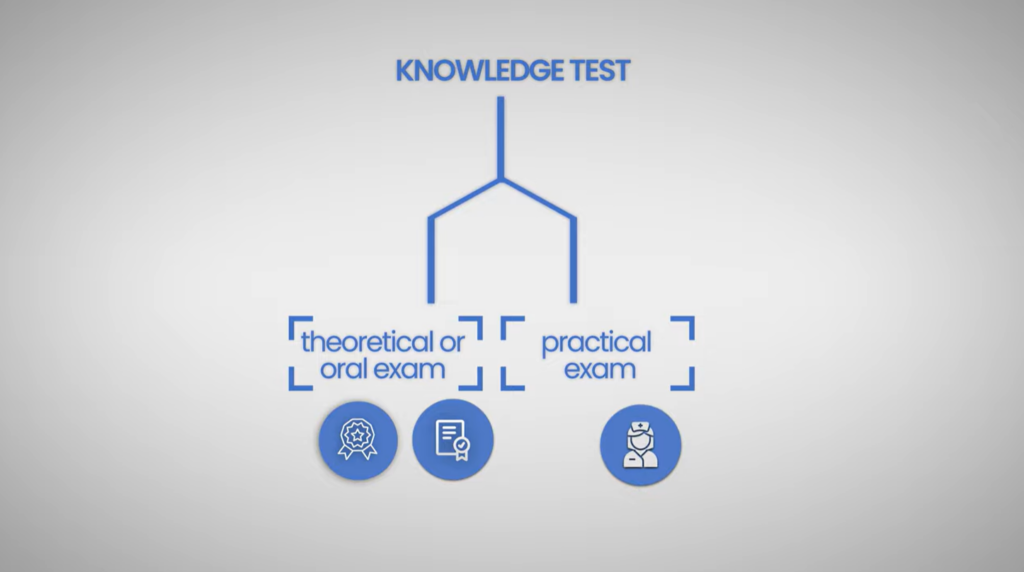
The second option is to go straight for the knowledge test, which is basically an exam that checks if your nursing knowledge matches the level of a German-trained nurse. The exam has two parts: a theoretical or oral exam and a practical exam. If you pass both, you’ll immediately get full recognition and your license to work as a registered nurse in Germany.
But here’s the catch. It’s not an easy one, and you usually only get two attempts at this. And if you fail both attempts, you might have to do the full 3-year nursing program to practise as a nurse. So if you are planning to go this route, then prepare well before taking the test.
In the end, whether you choose the adaptation program or the knowledge exam really depends on you your confidence, your learning style, and what your recognition report recommends.
Now, if you don’t already have a nursing qualification or if your degree isn’t recognized in Germany then your best option is to start fresh with a nursing apprenticeship, known in German as Pflege Ausbildung.
Pathway 2: Nursing Apprenticeship (Pflege Ausbildung)
The vocational training route or the Ausbildung is a great place to start if you want to build a nursing career in Germany from scratch.
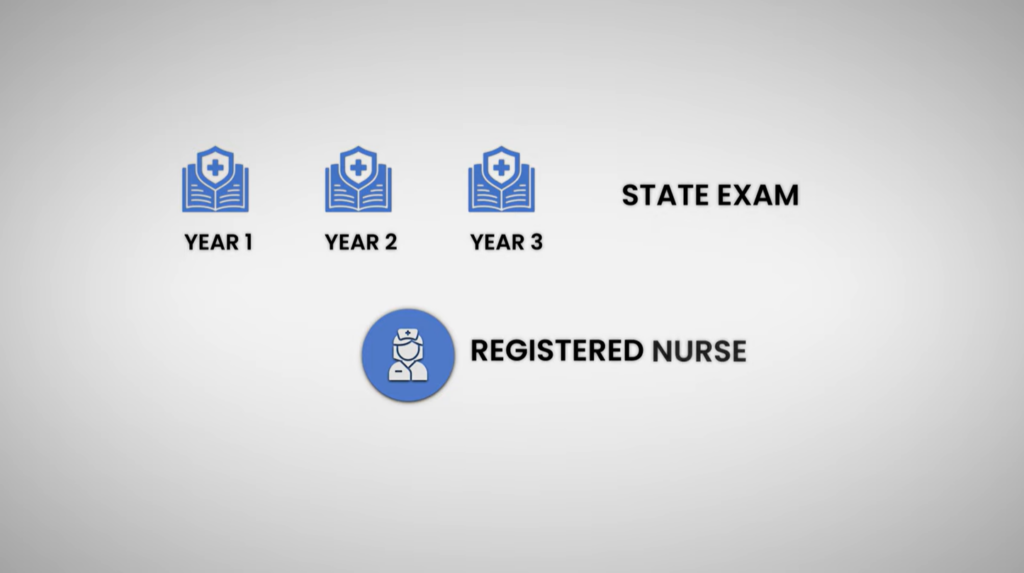
It’s a 3-year dual program, which means you’ll be studying at a nursing school while also working in a hospital or care home at the same time. The best thing about a Nursing Ausbildung is that you can earn while you learn. And by the end, you’ll have a qualification that’s officially recognized all across Germany.
So, let’s break down step-by-step how you can apply for this program.
Step 1: Research and choose your program.
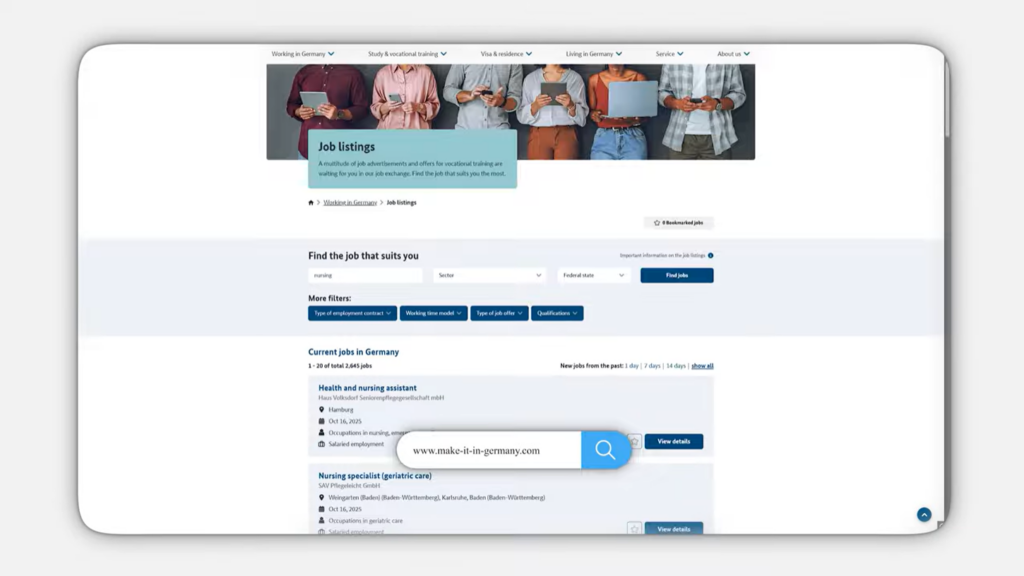
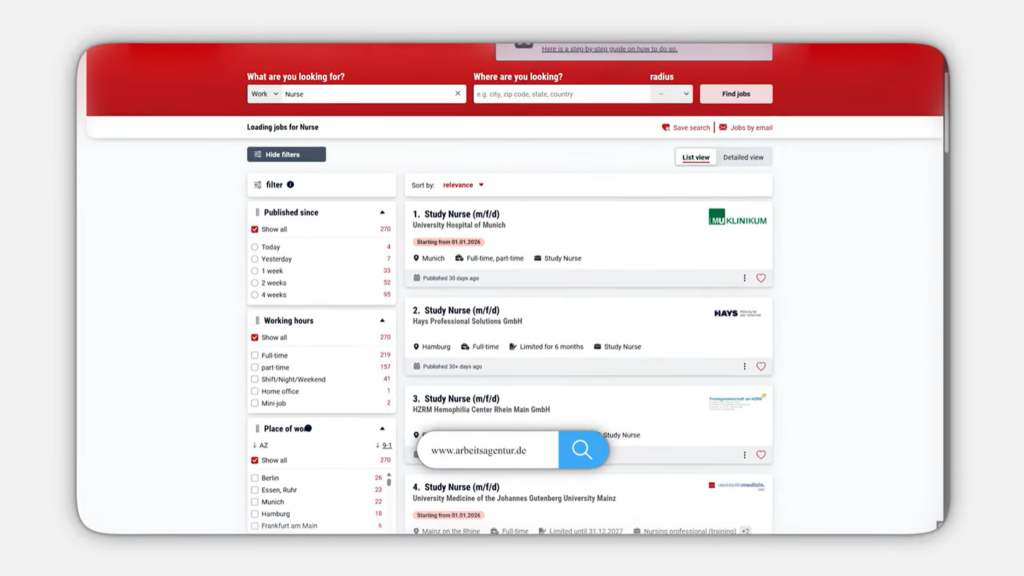
First things first, just like the first pathway, you have to decide where in Germany you want to do your Ausbildung. Then, once you’ve picked a location, start looking for hospitals or nursing schools in that location that offer apprenticeship programs. A great place for you to begin is the “Make it in Germany” website that lists verified training opportunities. Another place you can check for opportunities is the Federal Employment Agency’s website. If you prefer job portals, try ausbildung.de or berufenet.arbeitsagentur.de, where you can filter specifically for “Ausbildung Pflegefachmann/-frau.” And don’t forget many hospitals and nursing homes post apprenticeship details directly on their own websites, usually under a “Karriere” or “Jobs” section.
Step 2: Make sure you meet the requirements.
Once you’ve found a nursing Ausbildung program that fits, it’s time to get all your documents and requirements in order.
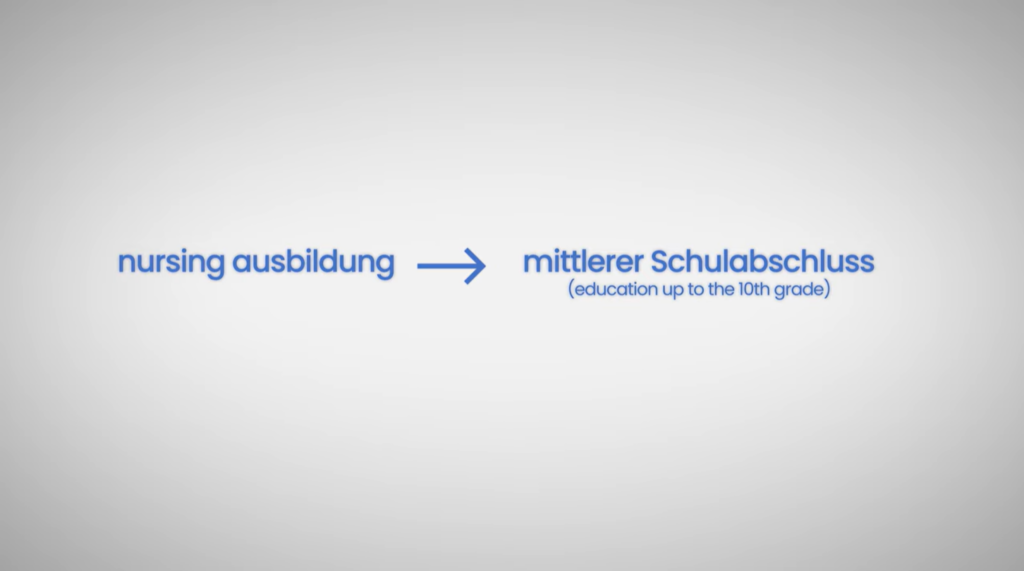
First, you’ll need to have your school certificates translated into German, and in some cases, they might also need to be officially recognized through the ZAB that’s the Central Office for Foreign Education. For nursing ausbildung, you’ll need at least the equivalent of a “mittlerer Schulabschluss,” which is basically completing education up to the 10th grade.
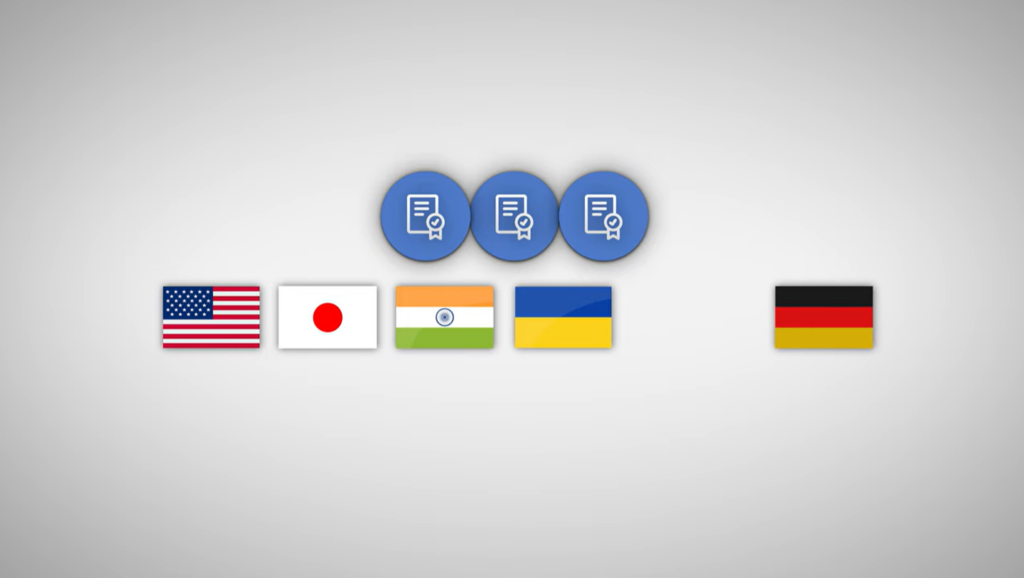
German language skills are a must. You should aim for at least B1 level, but B2 is even better. You’ll also need a doctor’s certificate confirming that you’re fit for the job, and a police clearance certificate showing you have no serious criminal record. And don’t forget a cover letter and CV both written in German.
Step 3: Send your applications.
Once everything’s ready, go ahead and submit your application along with the documents either by email or through the hospital’s online portal, depending on how they ask for it.
And here’s a tip apply to multiple schools or hospitals instead of waiting on just one. That way, you’ll increase your chances of getting accepted faster.
Step 4: The interview.
If your application looks good, you’ll usually be invited for an interview mostly online if you’re applying from outside Germany. The interview will be in German, so make sure to prepare well beforehand learn a bit about the hospital or nursing school, and be ready to answer questions about your motivation to train and work as a nurse in Germany.

Step 5: Get your training contract.
If you’re selected, you’ll receive an Ausbildungsvertrag or training contract. It includes all the key details like your stipend, start date, and other terms and conditions. Read it carefully, and if everything looks good, sign it and send it back.
Step 6: Apply for your visa.
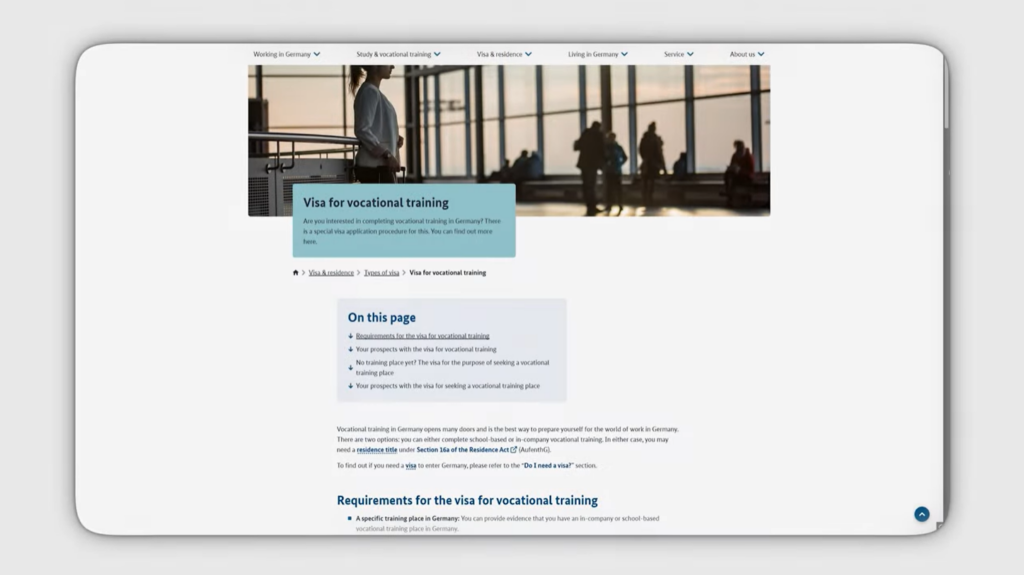
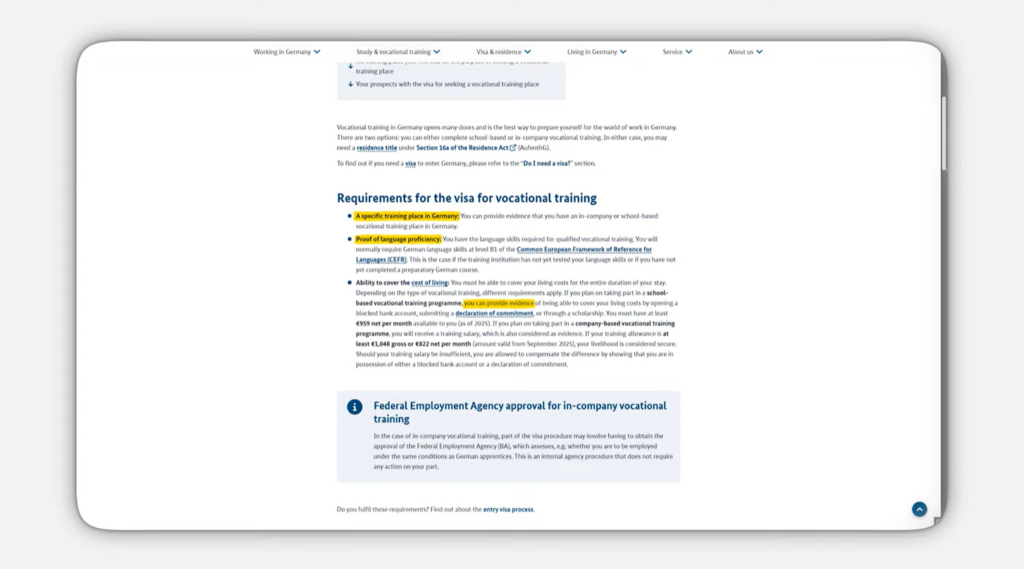
If you’re applying from a non-European country, you’ll need a visa to come to Germany. So, your next step is to apply for the vocational training visa (Visa 16a) at the German Embassy.
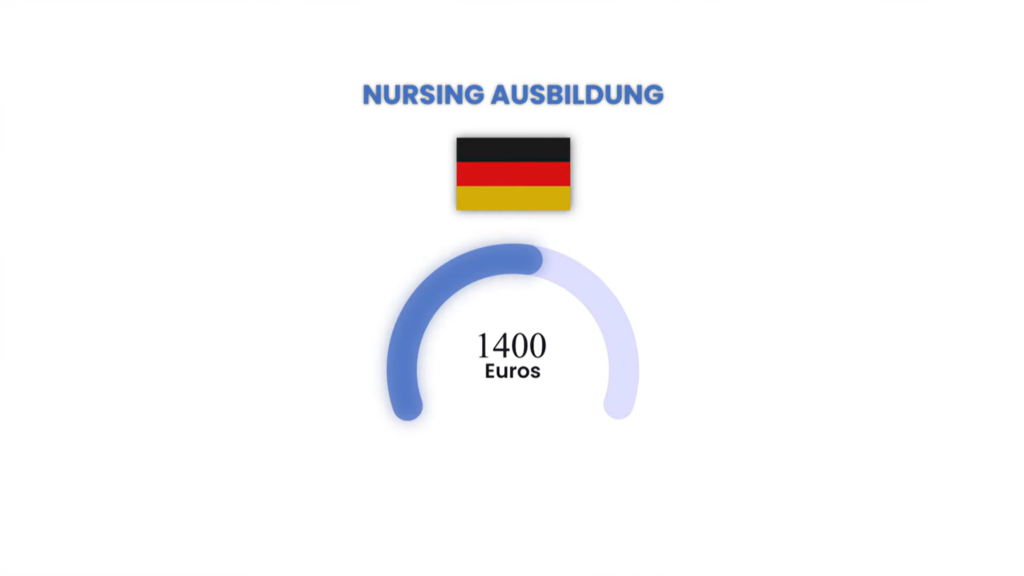
For this, you’ll need to submit your training contract and your German language certificate. In some cases, if your stipend isn’t enough, you might also be asked to show proof of finances, usually through a blocked account. But honestly, in most cases, this isn’t required. Nursing trainees in Germany usually earn around €1,400 gross or brutto per month, which is generally enough to cover basic living expenses.
After completing your 3-year training, you’ll take the state exam and once you pass, you officially become a registered nurse in Germany.
From there, you’ve got options. You can stay and work at the same hospital if they offer you a position, or you can apply directly to other hospitals or care facilities. Most of them list job openings on their websites under sections like “Karriere” or “Stellenangebote.”
You can also explore job portals like the Federal Employment Agency’s Jobbörse, Make it in Germany, StepStone, or Indeed all of which regularly post openings for nurses across Germany.
Now, if you’re willing to put in a bit of time and effort, you can actually do all this on your own. But if you’d like some official support with the application, you can also go throught the recruitment programmes run by the Zentrale Auslands- und Fachvermittlung (ZAV) the International Placement Service of Germany’s Federal Employment Agency.
For example, the well-known Triple Win Program, which recruits nurses from countries like the Philippines, Kerala in India, Bosnia, Tunisia, and a few others. I will make a detailed video on this program, its requirements, how to apply, and other details. But in short, they help with everything from handling paperwork and recognition to meeting language requirements and even finding a job.
Another great option is the German Agency for International Healthcare Professionals (DeFa), which is supported by Germany’s Ministry of Health. They also help foreign nurses with the recognition process, job placement, and settling into the country. I will provide the link to both websites below.
And of course, there are private recruitment agencies too but be careful here. Only go with reputable agencies that follow ethical recruitment standards. There should be no hidden fees, no dodgy contracts, and full transparency at every step.
Now, let’s talk about the benefits once you start working as a registered nurse in Germany, starting with the most obvious one: salary.
As a fresh nursing graduate, you can generally earn between €2,800 and €3,500 per month, depending on where you work and how much experience you have. This is the “brutto” or gross salary before taxes. On top of that, you get extra pay for night shifts, weekends, and overtime. With a few years of experience, your salary can go up to around €4,000 or even more per month. And yes you also get 30 days of paid leave every year, paid sick leave, and strong worker protections that make sure your rights are respected.
Becoming a nurse in Germany is more than just finding a job it’s about building a new chapter of your life with purpose and stability. Yes, the journey can feel challenging at times the paperwork, the language, the waiting but every step you take brings you closer to a meaningful career in one of the world’s most respected healthcare systems.
And since learning German is one of the key requirements to get there, I’ve put together a free German beginner guide to help you get started with the basics.