

I’ve been getting a lot of messages on Instagram, YouTube, and everywhere asking me the exact same thing: Considering the current job situation, is it still worth coming to Germany? And honestly, I understand the confusion.
On one hand, you keep hearing this big narrative that Germany needs more skilled workers. But then, on the other hand, you hear things like the economy slowing down, companies going bankrupt, and people losing their jobs. So which one is it? I will break down the ground reality of the job market in Germany right now.
Because if you’re someone planning to move here, whether for studies or work, you have the right to know the full picture before making that decision.
Current Situation
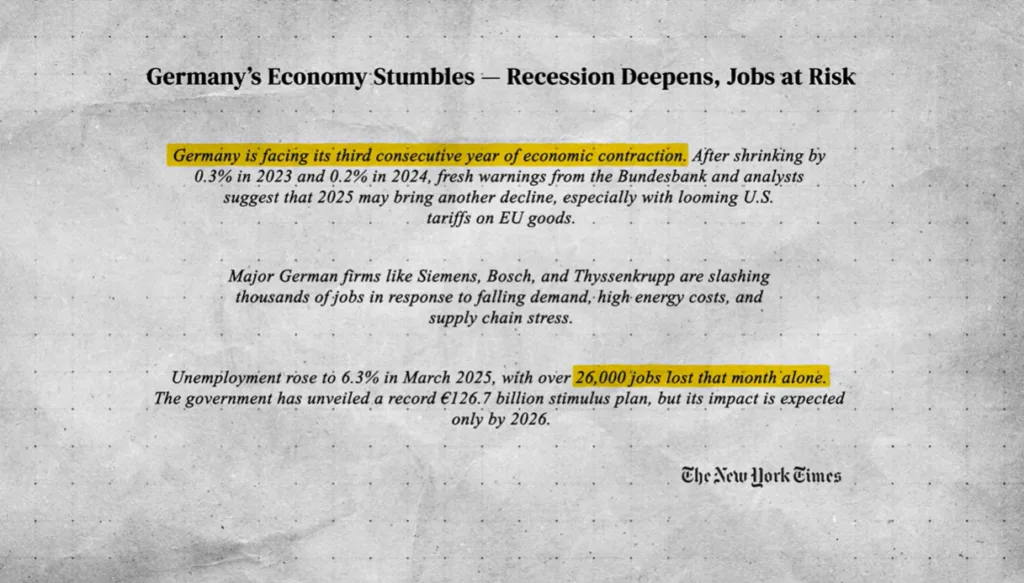
I’ll be honest with you, Germany is going through some really tough times right now. The economy has been shrinking for the past few years, and unemployment is slowly going up. To really understand why we are here, we need to travel back to 2022.
See, Russia used to be Germany’s main energy supplier. And once the war started, gas supplies were cut off, and energy prices shot up like crazy.
And industries got hit really hard. Suddenly, it became way more expensive to produce anything in Germany compared to other countries. So what did big companies do? They moved a big part of their production to places like China, where it’s just cheaper to operate. What about the smaller companies? They didn’t have that option. So many just shut down.
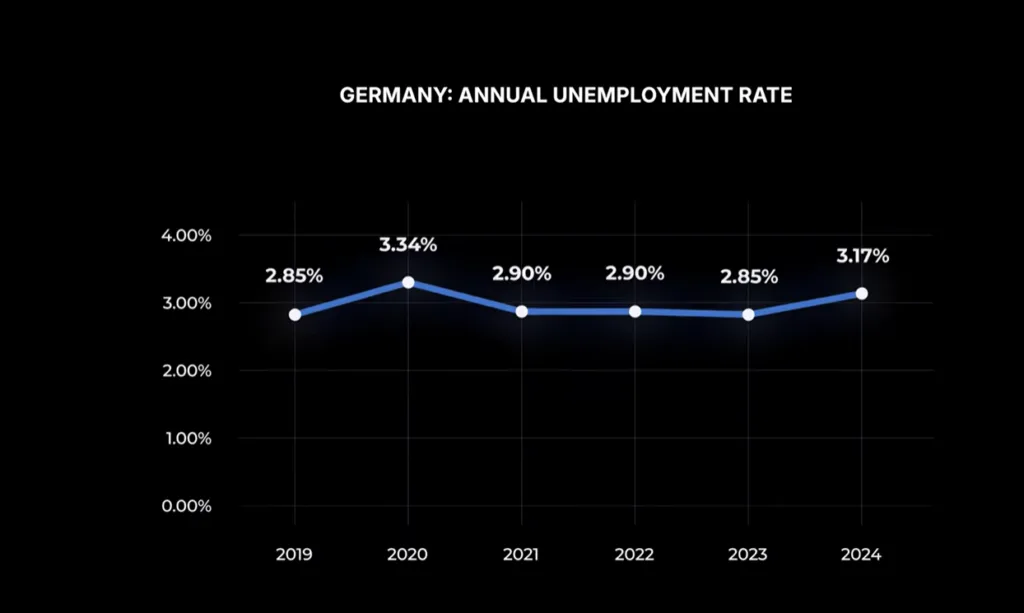
Then there is the rising competition from China, especially in the automotive sector. And it doesn’t stop there. There’s also uncertainty with U.S. tariffs and changes in government policies; it’s a lot. And when businesses are confused and they don’t feel confident about the future, the first thing they stop doing is hiring.
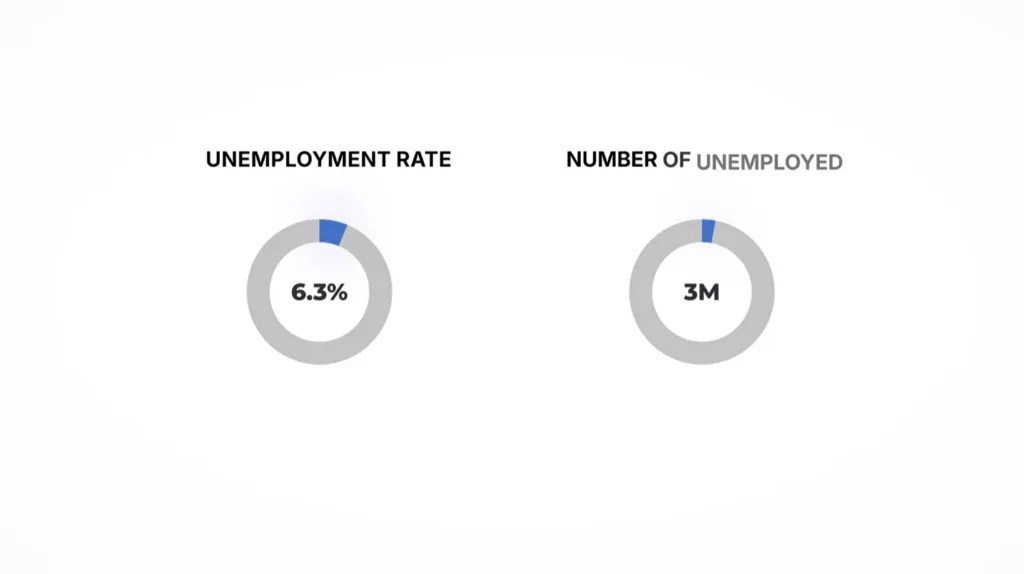
As of July 2025, Germany’s unemployment rate is at 6.3%, with around 3 million people unemployed. Now this is where things start to get interesting. Even with all the economic problems, Germany still has a worker shortage.
Thanks to its aging population. In fact, half the companies here say they can’t find enough skilled staff.
But and this is important that shortage isn’t everywhere. It’s in very specific areas called “bottleneck professions.” We’re talking about jobs like nurses, electricians, plumbers, and construction workers. These roles are always in demand even during a recession.
But you can’t just land in Germany and start working in one of these jobs. Most of them need some kind of qualification. Either a university degree or something called an Ausbildung, which is basically vocational training.
So it’s not that jobs have disappeared. They exist just in specific sectors and are not easy to get into unless you already have the skills and experience.
But here’s what makes it even worse. Since June 2024, after Germany introduced the Opportunity Card, the number of people moving here has shot up. And they’re not applying for those high-demand jobs I just talked about. They’re all going after the office jobs in IT, business, marketing, finance, and HR. And guess what? So is everyone else.
I guess you are smart enough to understand how competitive the job market would be when people from all over the world apply for the same limited number of office jobs.
And in situations like this, where there are plenty of candidates to choose from, employers get picky. They start looking at things like German language skills. Because here’s the truth: In Germany, employers will always prefer someone who speaks German. It doesn’t matter if the company is international or based in a big city like Berlin or Munich. So if you’re not comfortable speaking German, many companies won’t even consider your application.
If you’re serious about working in Germany, you have to start learning German. And I’m not talking about just A1 or A2. You’ll need at least B2 or C1 to be taken seriously in most jobs. That’s just the current reality.
So if you’re planning to come to Germany in 2025, and you’re not in one of those high-demand fields, then you really need to understand that the competition is intense and your chances of getting a job are not very good.
What Should You Actually Do?
So after everything we’ve talked about the layoffs, the competition, the language barrier you’re probably wondering, “Okay, but what can I actually do?”
Well, if you’re serious about moving to Germany, there are two solid paths I’d recommend.
First, come as a student. This is probably the safest and most flexible way to move to Germany right now. Because when you come here to study, you get time. Time to settle in, time to figure out how things work here, and most importantly, time to learn the language. You’re not under any kind of pressure to land a job the moment you arrive.
And if you already have some work experience, you can also start applying right away while you are studying. And if you manage to get a job offer, you can easily switch your visa from student to work.
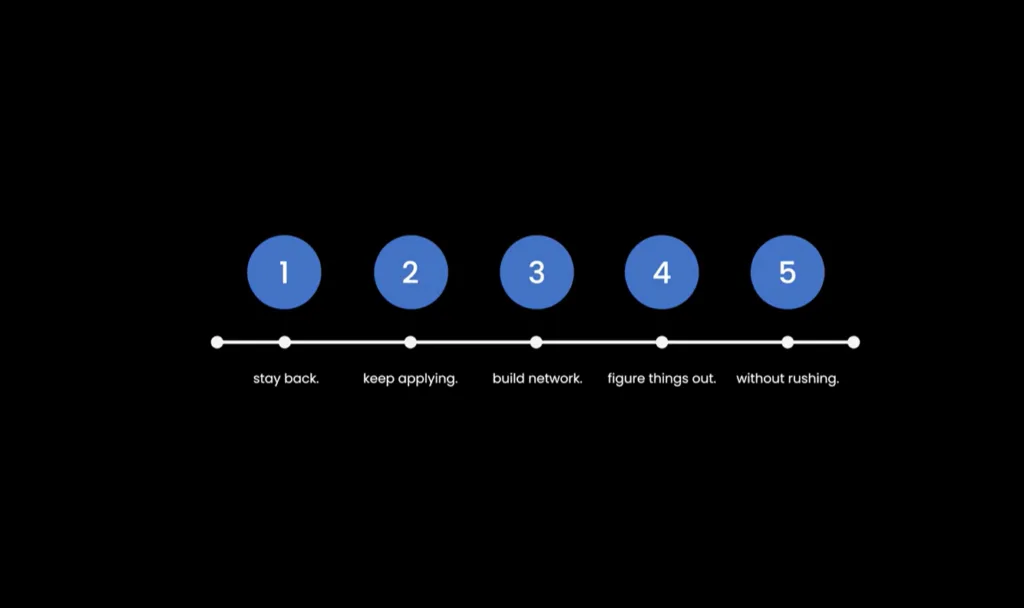
But even if that doesn’t happen immediately, once you finish your degree, Germany gives you 18 months on a job-seeker visa. You can stay back, keep applying, build your network, and figure things out without rushing.
You are also allowed to work part-time while studying. And sometimes, those part-time roles turn into full-time jobs after graduation. The only downside to this plan is that you’ll need to invest some money and time upfront to set up the blocked account and to find the right master’s program.
Now, if you don’t want to come as a student, that’s completely fine. But then, don’t just pack your bags and land here without a plan. If you’re still in your home country, stay there. Keep your current job, but spend the next 6 to 8 months fully focused on learning German. Aim for at least B1, ideally B2, before you even start applying.
Parallelly, look at the job market in your field. Are there roles available? What qualifications are they asking for? Do they mention German language requirements? What level of experience are they expecting? The more you know before you come, the better your chances of making it work.
So… do I think Germany is still worth it? Yes. You’re not wrong for dreaming. You’re not wrong for hoping. But it’s not for everyone. It’s only for those who come in with the right skills, the right mindset, and a solid plan.
If you’ve got that, if you’re adaptable, if you’re willing to learn the language, understand the system, and put in the work, then Germany still has a lot to offer.