
If there’s one thing in Germany that feels more difficult than learning the language, it’s finding an apartment. Honestly, it can feel like a full-time job. And don’t think it’s just about money. Having a bigger budget definitely helps, but in cities like Berlin, Munich, and Hamburg, the demand is so high that sometimes your application may not even get noticed.
I’ve personally moved apartments in Germany about five times in the last 10 years for different reasons. And trust me, it was never easy. But every single time, I still managed to find a place within just a few weeks.
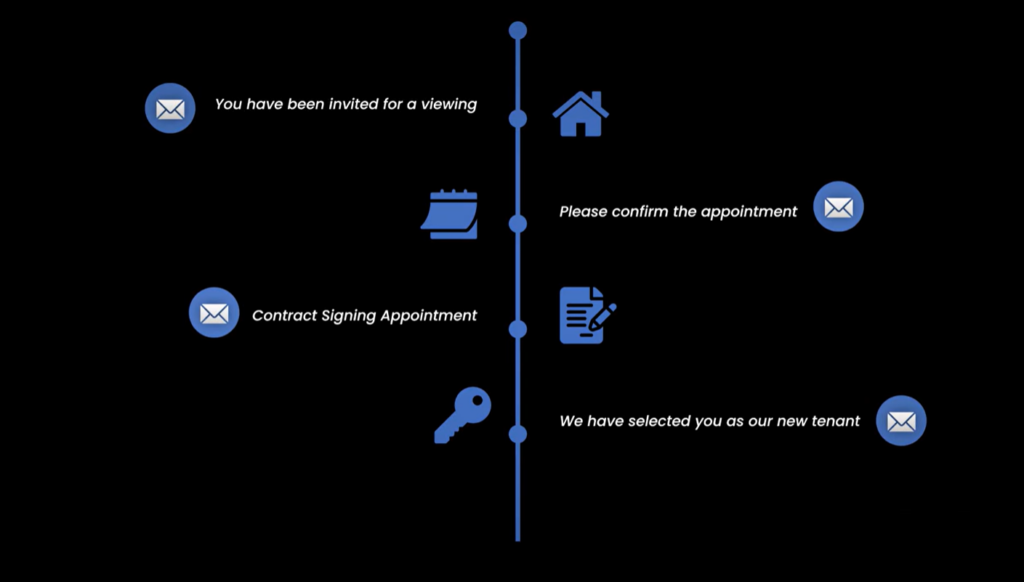
Because here’s the thing: it’s not about randomly applying to a thousand listings and hoping one sticks. There’s a method to the chaos. And if you know how to approach it strategically, it’s actually not as difficult as it looks. So let’s get started.
Figure Out What You Want.
Before you even start looking for an apartment in Germany, there’s one simple question you need to ask yourself: What exactly do I want?
Are you fixed on a specific city or maybe even a certain neighborhood? How many rooms do you actually need? And do you care if it’s a ground-floor apartment or a maisonette? The clearer you are here with your search, the easier it is to find a place that actually fits. Otherwise, you’ll just waste hours scrolling through listings that were never right for you in the first place.
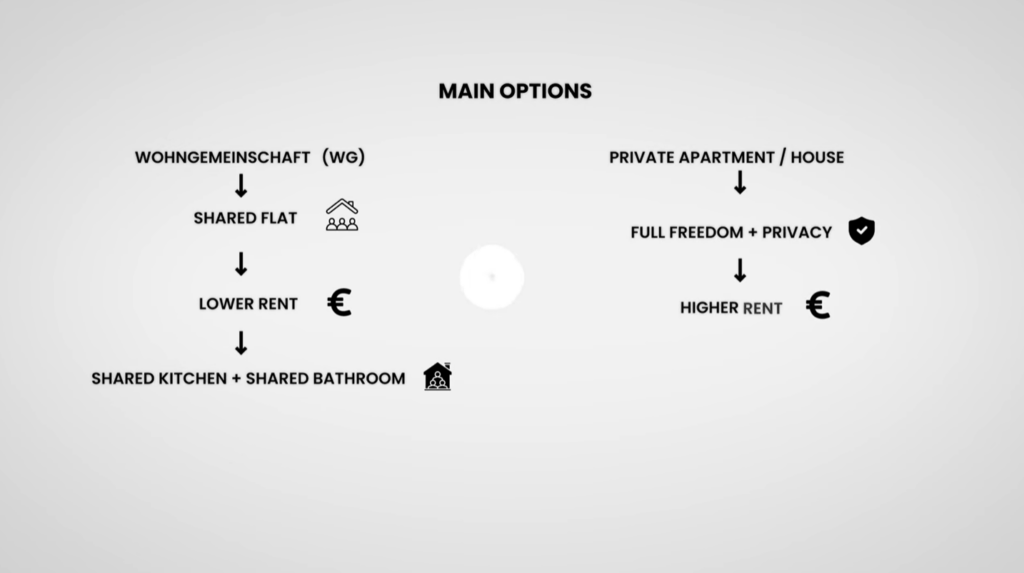
Even if you don’t have clear answers to all these questions, there’s still one important decision you have to make: what type of apartment do you actually want? Because that single choice will pretty much decide how much rent you’ll be paying.
And here you’ve got two main options. The first one is a Wohngemeinschaft, or WG, which basically means a shared flat. Here, the benefit is obvious—you split the rent, so it’s way cheaper. The trade-off? You’ll be sharing your kitchen and bathroom with others.
The second option is to go for a private apartment or even an individual house. Here, you get all the freedom and privacy, but with a higher price tag.
Where to Search?
Once you’ve figured out what you actually need, the real battle begins.
Let’s start with the online platforms. The one you’ll hear about the most is ImmoScout24. And for good reasons. It’s the biggest player in the market, and most landlords and real estate agents post their listings there.
Then you’ve got Immowelt and Immonet, which work in a similar way. If you’re ready to share a place with others, then WG-Gesucht is where you should be looking.
All these platforms work pretty much the same way. You set up a profile with details like your income, job, and household situation. Then you type in the city or postal code, choose the kind of apartment you’re looking for, add filters for size, location, or anything else, hit search, and you’ll see a list of options. You can even set alerts so you get notified the moment something matches your filters.
In case you are a student, your best bet is student dormitories, which are usually run by the Studentenwerk or student union. They are affordable, convenient, and close to universities. But they’re also in high demand, so apply as soon as your admission gets confirmed.
Another way to find an apartment in Germany is directly through real estate agents. They usually list properties on their own websites, or sometimes even in local newspapers. And in most cases, they are hired by the landlord, so you don’t have to pay them anything.
And of course, we can’t ignore social networks like Facebook, Instagram, Telegram, WhatsApp, and Discord; you can find listings everywhere. Even Reddit, LinkedIn, and Xing can be useful. And then, there’s Kleinanzeigen, which is kind of like Germany’s Craigslist.
The good news is that most of the listings on these networks will be from real tenants instead of professional brokers. And that means the conversations feel more casual, and you have a higher chance of getting a one-on-one viewing.
Finally, if you are short on time, take a look at short-term rentals. You can book them from abroad; they come with less paperwork, and most of them are fully furnished. And most importantly, they allow Anmeldung, which is the official registration of your address in Germany.
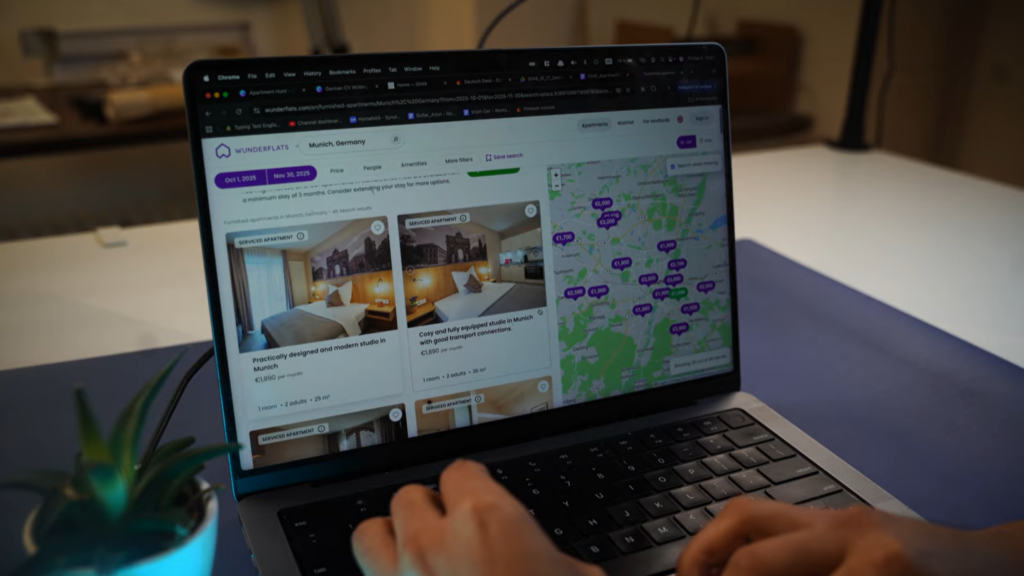
You can stay for a few months while you take your time to find the right place. You can find such short-term rentals on platforms such as SMARTments, Wunderflats, Spotahome, Habyt, and HousingAnywhere. Even though they’re more expensive than normal rentals, they can save you time and stress, especially when you’ve just arrived in Germany.
Reach Out
Once you’ve narrowed down a few apartments you like, then comes the real challenge: reaching out to the landlord. And this is exactly where most people mess it up. The moment you find a place that fits, whether it’s online, through a friend, or even in a newspaper, apply right away. Speed is everything. Apartments can disappear within hours, sometimes even minutes. It’s basically first-come, first-served.
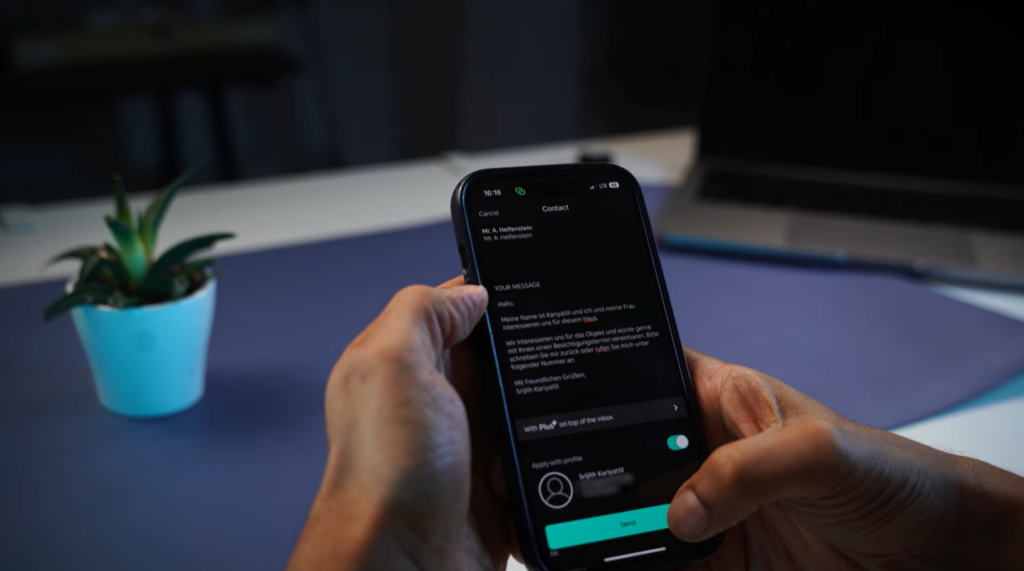
And don’t just send a plain “I’m interested in the apartment” message. That won’t get you anywhere. You have to approach it exactly like applying for a job. Hundreds of people are after the same flat. So if your application doesn’t stand out, it will just get lost in the pile.
So, write a short but clear introduction with your name, age, job, monthly income, how long you’ve been in Germany, and maybe even a little about your lifestyle. Have it ready in both English and German. This way, landlords can get a quick sense of who you are without having to ask a hundred follow-up questions.
Viewing
And if you’re lucky enough to get invited for a viewing, don’t just show up empty-handed. Go prepared with a small “application package.” Include a simple one-page resume with a short intro about yourself: who you are, your background, your profession, and maybe even why you’re moving. Keep it polite, keep it professional.
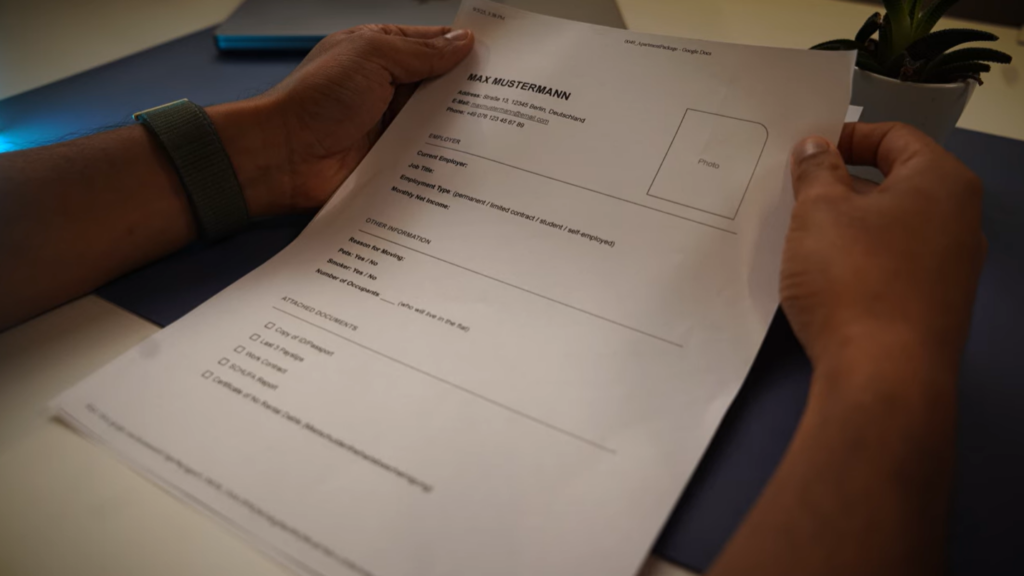
To this application package, add all the important documents such as
- Proof of your Residency Status
- Your work contract.
- Proof of income – usually your last three payslips
- SCHUFA or your German credit score.
- And if possible, a Mietschuldenfreiheitsbescheinigung, which is a certificate from your last landlord confirming you don’t owe any rent.
And on the day of the appointment, print everything out and take it with you to the viewing. Dress smart, arrive early, and once you’re inside, be polite, ask a few questions, and try to build a connection with the broker or landlord. That little extra effort can make a huge difference in whether they remember you or not.

Finding an apartment in Germany isn’t easy; it takes time, effort, and a lot of patience. But if you know where to look, stay organized, and approach the process strategically, you’ve got a real chance.
And if you want some extra help with your apartment search, I’ve put together a complete support package. It includes a ready-to-use resume, a cover letter, a list of real estate platforms, a first-contact email, a phone call script, questions to ask during the viewing, and a checklist for each stage.