
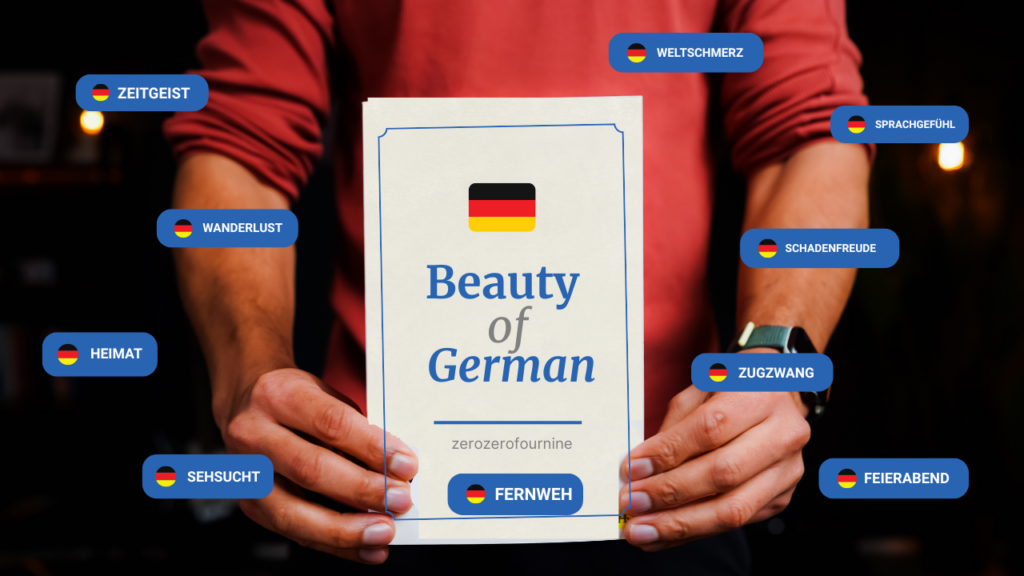
German is one of the most beautiful languages in the world but not because it has words like Donaudampfschifffahrtsgesellschaftskapitän. Yeah, that’s a real word. Try saying that three times in a row.
But the real beauty of German isn’t in those tongue-twisters. It’s in those words that can easily wrap entire emotions into a single expression something English doesn’t even come close to doing.
we’re going to talk about three German words that English has already fallen in love with and seven more that totally deserve to be borrowed. And towards the end, I’ll share that little secret, how Germans became so good at creating the perfect word for the perfect moment. Los geht’s!
1. Zeitgeist
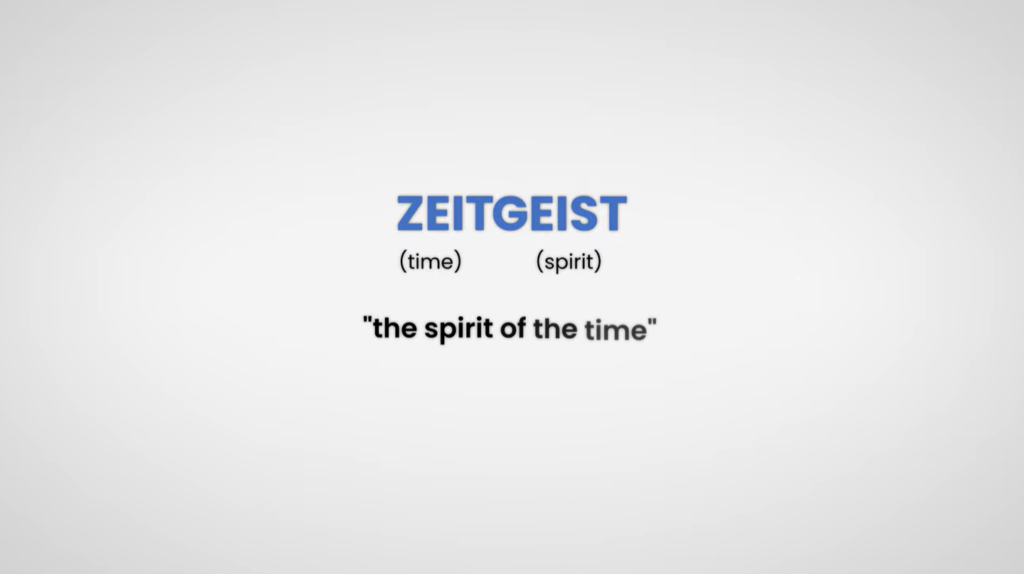
Zeit means “time,” and Geist means “spirit.” Put them together, and you get Zeitgeist, which literally means “the spirit of the time.” But the word is much more than that. It describes the cultural and psychological fingerprint of an era.
Every decade has its own Zeitgeist the mood, energy, or shared mindset that defines that period. For example, the free-spirited uprising of the 1960s, the money-driven materialism of the 1980s, or the digital anxiety of the 2020s.
English doesn’t really have a single word for this. Of course, you can say “the spirit of the age,” but Zeitgeist just fits better. So the English language simply borrowed it. Today, we use Zeitgeist everywhere in art, design, film, even politics, when we want to express something that captures the true essence of its time.
2. Wanderlust
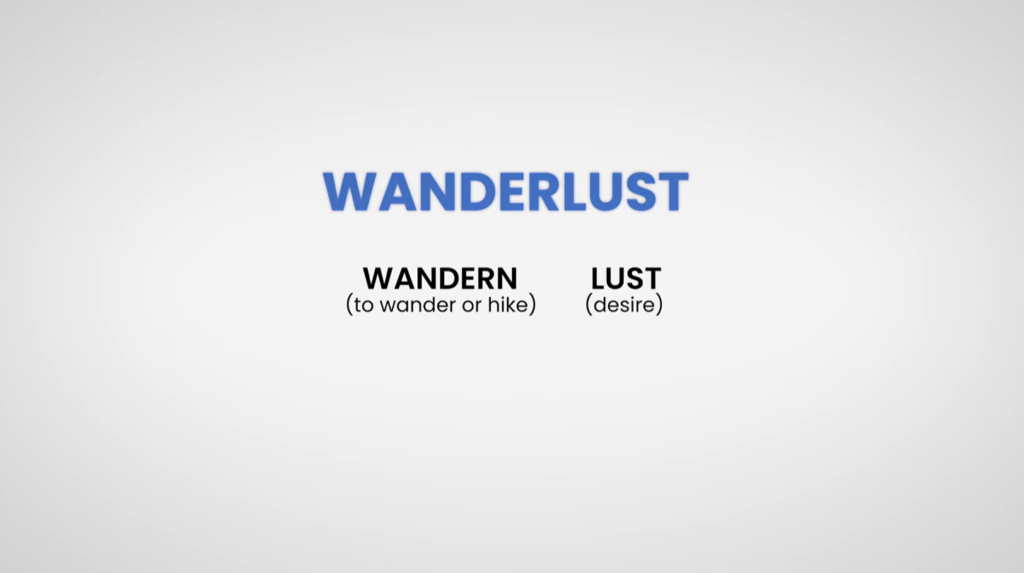
Wanderlust comes from two German words wandern, meaning “to wander or hike,” and Lust, meaning “desire.” Put them together, and you get that deep, almost irresistible urge to travel and explore the world.
Now, it’s not just about wanting to go for a vacation. It’s that feeling of restlessness or that uneasy pull you feel when you’ve stayed in one place too long. The word represents the thrill of packing a bag, stepping out the door, and not really knowing where you’ll end up.
English has words like “travel bug” or “itchy feet,” but none of them capture that mix of freedom, curiosity, and adventure all packed into one simple word. And that’s why English didn’t bother translating it. It just took Wanderlust as it is.
3 . Schadenfreude
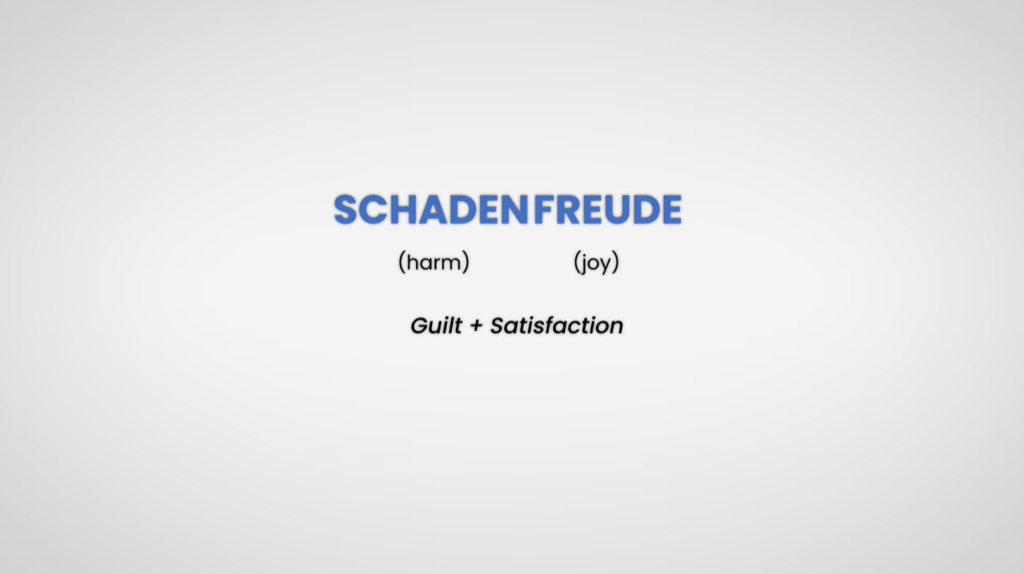
Schadenfreude. Now you know this word. It is one of those words that makes you say, “Oof… that’s a little too real.” It literally means “damage-joy” Schaden for harm and Freude for joy. It’s that guilty little thrill you feel when someone else fails especially someone who kind of deserved it.
For example, when the arrogant coworker’s big presentation crashes. You don’t want to feel good about it… But somehow, you do. That’s Schadenfreude.
There’s no single word in English that captures this feeling. I mean, you can always say, “ I am taking pleasure in someone else’s misfortune”? But Schadenfreude just nails it sharp, honest, and a little uncomfortable.
And maybe that’s exactly why English borrowed it. Because this emotion is universal. We’ve all felt it at some point the Germans were just honest enough to give it a name.
Now, let’s take a look at the seven German words that I think other languages should totally take over without any delay.
4. Zugzwang
And number seven on my list is a beautiful word that perfectly captures a deeply human moment. Zugzwang. The word actually comes from chess Zug meaning “move” and Zwang meaning “force.” It’s that moment in the game where you’re forced to make a move, even though you know it’ll probably make things worse.
That feeling when you’ve got no choice left but to act. We face these moments all the time, right in relationships, at work, in life when deadlines close in, when silence is no longer an option, when doing nothing would be worse than doing something. In German, you’d say, “Er ist unter Zugzwang” “He’s forced to act.”
And yet English doesn’t have a single word for it. This is one of those words that helps us understand ourselves and others a bit better. Because when you realize someone’s in Zugzwang, you kind of get it you see why they acted the way they did. And that’s why it’s a keeper.
5. Weltschmerz
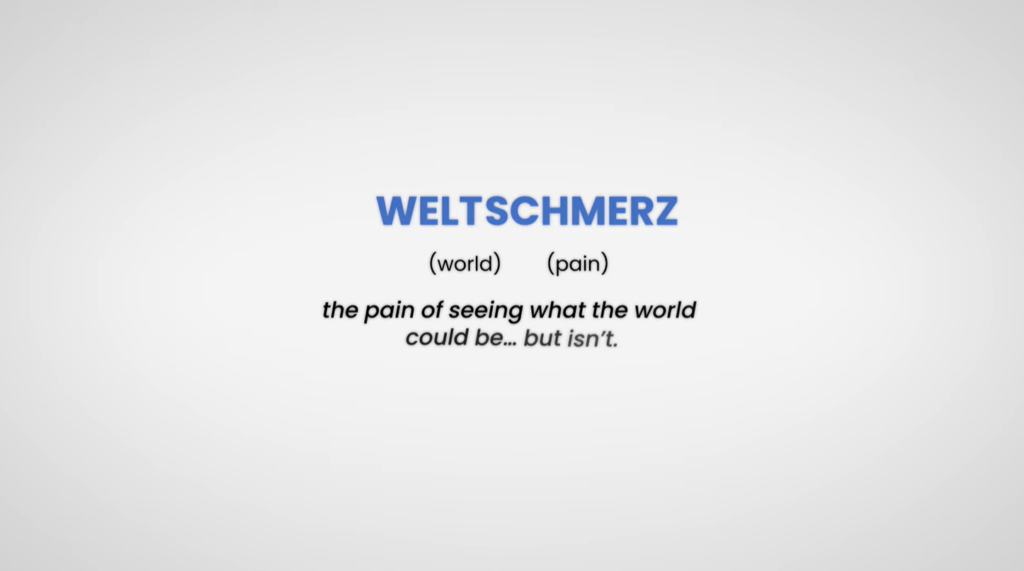
Number six on the list is a word that feels more relevant than ever Weltschmerz. Welt means “world,” and Schmerz means “pain.” Put them together, and you get “world-pain.” It’s that deep, almost poetic sadness you feel when you look at the current state of the world.
The word actually comes from the Romantic era, when writers and thinkers were caught between their dreams and the harshness of real life. Weltschmerz isn’t just sadness. It’s sadness with depth. That quiet discomfort you feel when the world doesn’t live up to what it could be. And that’s why Weltschmerz deserves a spot here. Because honestly, who hasn’t, at some point, looked around and thought, “Man… the world could be so much better than this.”
6. SPRACHGEFÜHL
Number five on the list is Sprachgefühl, which literally means “language feeling.” But its real meaning goes much deeper than that.
Sprachgefühl is that natural instinct for language the ability to just feel what sounds right. To know the perfect word, the perfect phrasing, the perfect tone, without even thinking about it. If you are someone with Sprachgefühl, you don’t have to think twice when you speak; the perfect expression just flows out naturally.
In English, we might say someone “has a way with words” or call them “eloquent,” but neither really captures that effortless intuition Sprachgefühl has. Honestly, I wish I had enough Sprachgefühl to explain this. But this is one word I’d love to see used a lot more often.
7. Heimat
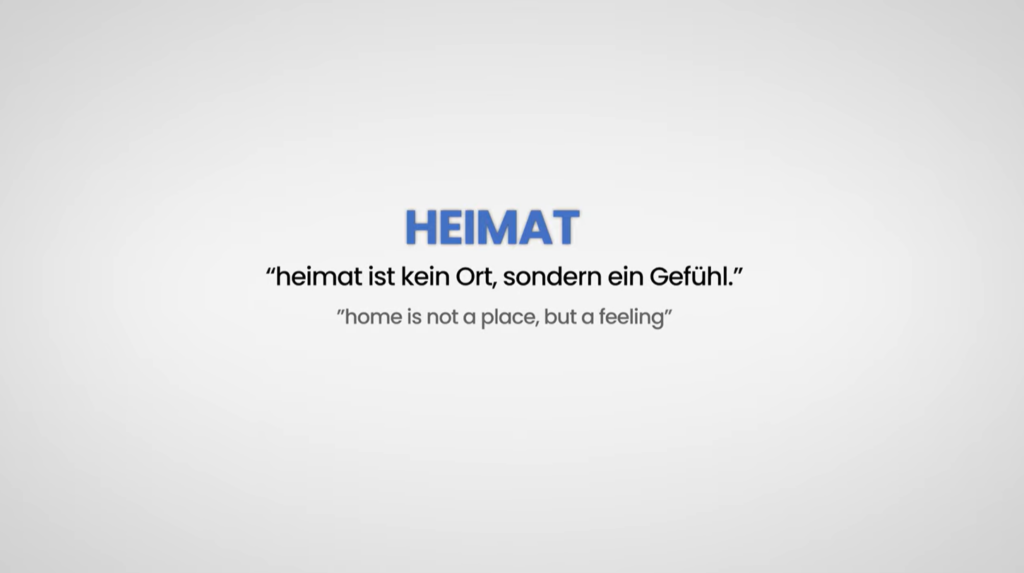
Number four on the list is Heimat and translates to words like “home,” “homeland,” or “roots”. But they still miss something. Because Heimat isn’t just a place. It’s not only where you were born or where you live. It’s much deeper than that. It could be your childhood village, your grandmother’s cooking, a song that reminds you of home, or even a smell that takes you back in time.
Heimat is personal. It’s emotional. As Germans often say, “Heimat ist kein Ort, sondern ein Gefühl.” Home is not a place, but a feeling.
And that’s exactly why Heimat deserves to stay in our vocabulary.
Because it captures something universal that need to belong, to feel understood, to have somewhere or someone that feels like home.
8. Feierabend
Number three on the list is a common term Germans use for the time after work, Feierabend. Literally, it means “celebration evening.” It’s. But it’s not just that.
Feierabend is that golden part of the day after you’ve logged off, but before you go to bed when life finally feels like yours again. It’s when you put your tools down, close your laptop, and just… breathe. Maybe you grab a beer, take a walk, spend time with family, or do absolutely nothing and that’s exactly the point.
Think about it. In English, we say “after work” or “clocking out,” but those sound so dry, so mechanical. Feierabend feels alive. It’s joyful. It celebrates the idea that rest isn’t laziness it’s sacred.
And that’s why I love this word. It’s not just a phrase; it’s a mindset. A reminder to draw a line between work and life and to actually celebrate the time that’s yours.
9. Sehsucht
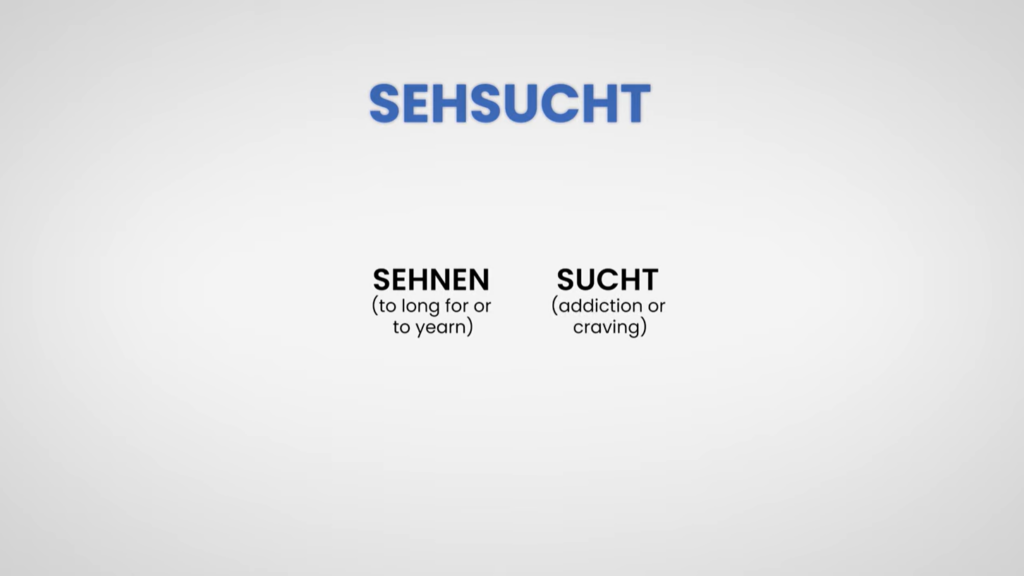
Number two on the list is one of those words that doesn’t just describe a feeling it is a feeling. Sehnsucht. The word literally comes from two parts: Sehnen which means to long for or to yearn, and Sucht which literally means addiction or craving.
And that fits perfectly, because Sehnsucht is this deep, almost aching longing for something that’s missing. Now this could be a person, a place, or even something you can’t quite name. It’s just something you can’t stop yearning for, even if you know you’ll never truly have it.
In English, we might call it “longing” or “yearning,” but those words feel too small. Sehnsucht carries more weight more heart. It’s that bittersweet feeling of reaching for something just out of reach… and somehow loving the reaching itself. Beautiful right.
10. Fernweh

And now it’s time. The number one German word I think English should steal immediately is a beautiful word and something that deeply resonates with me: Fernweh. Literally, it means “distance pain.” And that’s exactly what it feels like that deep, aching longing to be somewhere far away. It’s like homesickness, but for a place you’ve never been.
Now, it might sound a bit like wanderlust, but Fernweh is different. Wanderlust is the excitement of adventure packing your bags, ticking off destinations. But Fernweh is not about a weekend getaway or a short trip. It’s quieter. It’s softer. It’s that slow, nostalgic pull toward the unknown. It’s about long journeys the kind that change you a little. The kind that makes you feel lost and found at the same time.
Before we wrap up, let’s talk about something that’s always fascinated me how do Germans come up with such beautiful words that fit so perfectly? And why can’t English do the same?
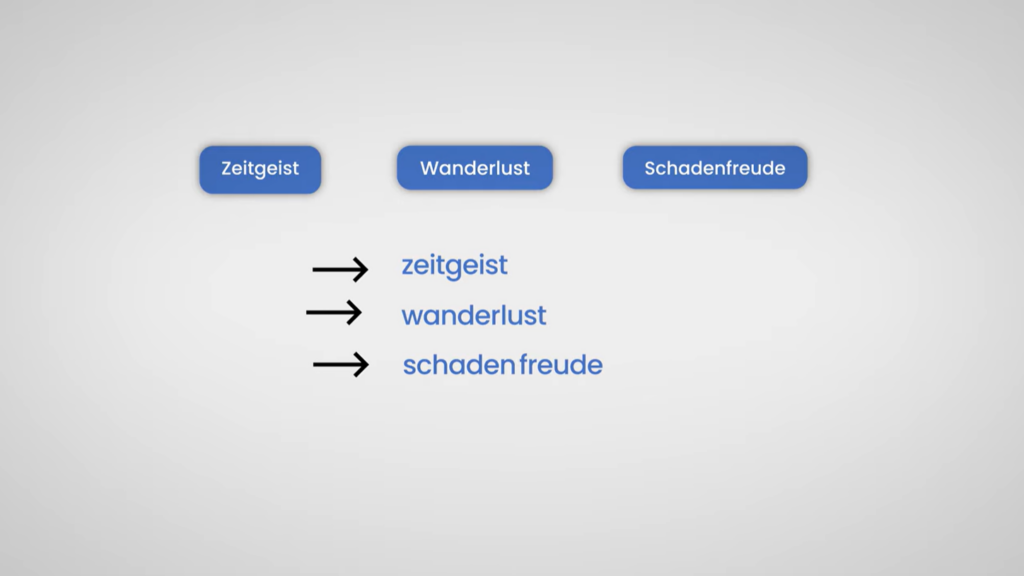
There’s a reason for that and it has to do with how Germans create new words. If you look at the ones we’ve talked about Zeitgeist, Wanderlust, Schadenfreude they all have something in common. They’re like Lego blocks. Two or three smaller words snapped together to form something completely new, yet perfectly meaningful.
And that’s the secret. Whenever Germans needed a new word, they didn’t look elsewhere they just combined the ones they already had until it made sense.
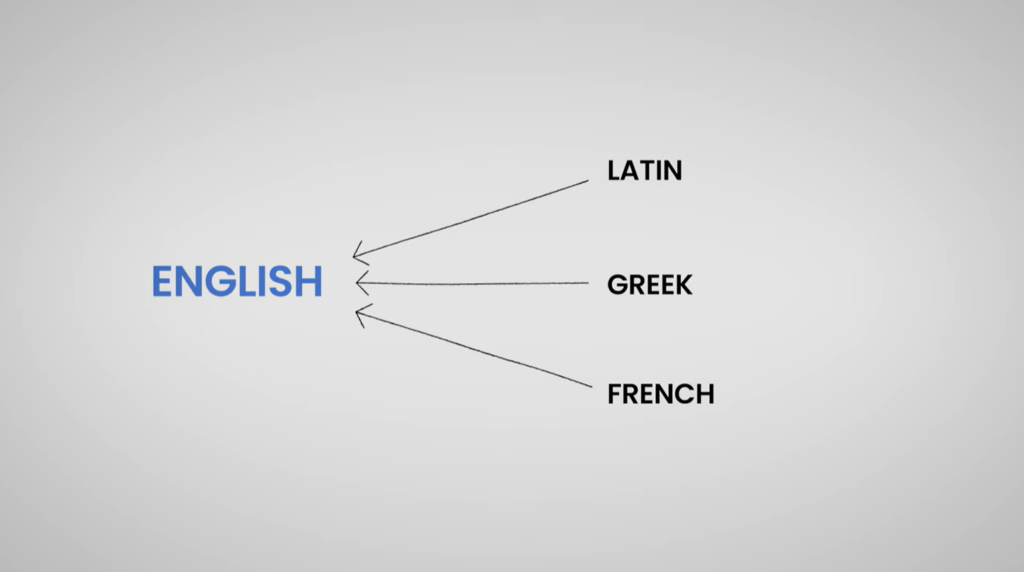
English, on the other hand, took a different approach. It borrowed words from Latin, Greek, French… basically from anyone who had a fancy-sounding word lying around. It made English rich, yes but also a bit less… personal.
Take television, for example. It’s this strange mix of Greek tele meaning “far” and Latin vision meaning “seeing.” Meanwhile, the Germans looked at the same invention and called it Fernseher literally, “far seer.” Simple. Direct. Makes perfect sense.
And that’s the real beauty of language, isn’t it? It’s not just about words it’s about connection. Every one of these German words reminds us that feelings, no matter how momentary or complex, can be captured, shared, and understood. Whether it’s the ache of Sehnsucht, the peace of Heimat, or the joy of Feierabend they all speak to something deeply human. The parts of us that long, dream, and find meaning in the smallest moments.